


Understanding the average weight of forklift battery isn't just about numbers on a spec sheet-it's about preventing your equipment from tipping over mid-operation. Here's something most warehouse managers learn the hard way: battery weight is a critical safety variable that directly affects stability, capacity, and daily operations.
Last year, a mid-sized distribution center in Ohio swapped their 2,800-pound lead-acid batteries for 1,200-pound lithium-ion units. Three weeks later, one of their forklifts nearly tipped backward during a routine pallet lift at 18 feet. Why? The new battery was 1,600 pounds lighter than what the forklift's counterbalance system was designed for.
Forklift batteries typically range from 1,000 to 4,000 pounds depending on type and capacity, with lead-acid variants weighing between 1,500-3,000 pounds and lithium-ion alternatives clocking in 30-50% lighter at 500-2,500 pounds. But this number isn't arbitrary-it's engineered physics at work.

The Weight Paradox: Why Heavier Sometimes Means Safer
Most people assume lighter equipment equals better performance. With forklift batteries, that assumption collapses under scrutiny.
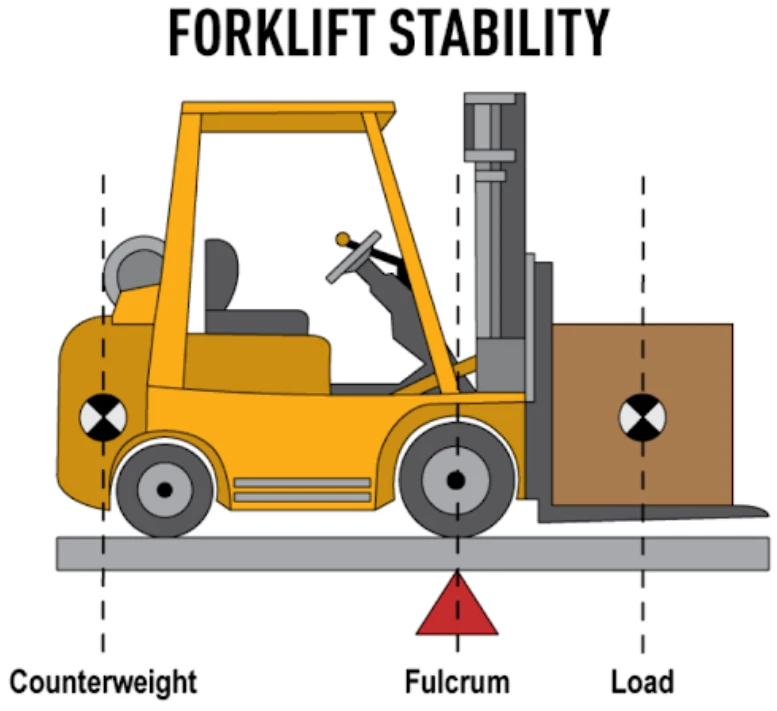
Your forklift battery serves two critical functions simultaneously. First, it powers the hydraulic systems and motors. Second-and this is where weight becomes non-negotiable-it acts as a precision-engineered counterweight. The battery's weight contributes directly to the forklift's counterbalance, preventing tip-overs when lifting heavy loads, with manufacturers designing each model around specific battery weight parameters.
Think of it like a seesaw. When your forklift mast extends 15 feet in the air carrying 3,000 pounds, that battery at the rear isn't just sitting there-it's the reason your operator isn't calling 911.
The 110-130% counterbalance rule requires battery weight to equal roughly 110-130% of maximum lift capacity. Drop below that threshold, and you're gambling with stability. Exceed it, and you're accelerating wear on every mechanical component.
What Actually Determines These Numbers
Battery weight isn't random manufacturing whimsy. It's the product of fundamental chemistry and engineering constraints.
A 24V/600Ah lead-acid battery weighs approximately 2,200 pounds, while a lithium-ion equivalent weighs around 900 pounds-lead-acid models use dense lead plates (11.3 g/cm³) and liquid electrolytes, while lithium-ion batteries employ compact lithium compounds with aluminum/copper cells (2.7 g/cm³).
The formula isn't complicated, but it's unforgiving:
For lead-acid: Weight (lbs) = Voltage × Capacity (Ah) × 0.04-0.06
For lithium-ion: Weight (lbs) = Voltage × Capacity (Ah) × 0.02-0.03
A 48V/800Ah lead-acid battery calculates to approximately 1,920 pounds (48 × 800 × 0.05), while battery density factors range from 0.04–0.06 for lead-acid and 0.02–0.03 for lithium-ion.
Three factors dominate the equation:
Voltage configuration - 24V batteries typically weigh 600–1,200 lbs, 36V models range 1,500–2,500 lbs, and 48V systems reach 3,000–4,000 lbs, with each 2-volt cell adding incremental mass.
Capacity demands - Higher amp-hour ratings require more active material. More material means more weight. A 1,200 Ah battery will always outweigh a 400 Ah unit at the same voltage.
Chemical composition - Lead's density of approximately 11.3 g/cm³ makes lead-acid batteries the heaviest option, while lithium materials are substantially lighter, with lithium-ion batteries weighing only about one-third of comparable lead-acid batteries under the same capacity.
But there's a wrinkle most specifications don't mention: environmental adaptation. Cold storage batteries require insulated casings that can increase mass by 5–8% beyond standard models. If you operate in sub-zero freezers, that "standard" 2,400-pound battery might actually weigh 2,592 pounds.
The $1.5 Million Productivity Drain Nobody Talks About
Weight doesn't just affect stability. It cascades through your entire operation in ways that accountants rarely track.
One multi-shift major equipment manufacturer discovered it was spending approximately $4,800 daily on lost productivity associated with removing and reinstalling lead-acid batteries for charging-translating to nearly $1.5 million annually spent on battery swaps alone.
Here's why weight compounds operational costs:
Physical handling infrastructure - 29 CFR 1910.178(g)(4) mandates using lifting beams or material handling equipment that securely lifts batteries without requiring awkward movements from workers, as industrial batteries are extremely heavy and can cause musculoskeletal disorders or grievous injuries without proper equipment.
A 3,200-pound battery demands specialized equipment. That means investment in overhead hoists, battery extractors rated for 4,000+ pounds, or hydraulic transfer systems. OSHA reports that 12% of forklift accidents involve battery changes-most stemming from improper handling of heavy batteries.
Storage burden - Lead-acid batteries require 8-hour charging plus 8-hour cooling periods, necessitating well-ventilated storage rooms with heavy-duty racking that can withstand the weight load of storing multiple batteries.
If you run multi-shift operations, you need spare batteries. Three shifts means three battery sets per forklift. At 2,500 pounds each, that's 7,500 pounds of storage requirements per vehicle. Multiply across a 50-forklift fleet, and you're engineering floors for 187 tons of battery weight.
Energy consumption mathematics - Every 100 kg reduction in battery weight decreases rolling resistance by approximately 3.2% and improves regenerative braking recovery by 1.7%, with switching from 1,000 kg lead-acid to 600 kg lithium saving 128 Wh/km.
Lighter batteries mean less mass to accelerate and decelerate thousands of times daily. A 300 kg lithium-ion pack can save 15–20% energy versus 1,000 kg lead-acid equivalents, allowing 2+ extra work hours per shift in multi-shift operations. Over a year, that energy differential pays real money.
The Data Plate Trap: Why "Close Enough" Isn't
Every forklift has a data plate-a metal specification tag usually mounted near the operator's station. This plate specifies minimum and maximum battery weight requirements, and installing a heavier or lighter battery than manufacturer recommendations creates a safety hazard due to counterbalance issues.
Ignore those numbers at your peril.
Installing too light: A battery lighter than minimum required weight may reduce your truck's lifting capacity and cause safety issues, potentially requiring a new spec plate to outline the altered capacity based on weight change.
That 5,000-pound capacity forklift might drop to 3,800 pounds of safe lifting capacity with an underweight battery. Your operator won't know until the load center shifts and physics takes over.
Installing too heavy: Picking a battery heavier than the maximum weight risks unnecessary strain on various equipment parts and can void the manufacturer's warranty.
Axle bearings, hydraulic systems, and steering components are engineered for specific weight tolerances. A 400-pound excess might seem trivial, but multiply it by ten thousand cycles per year. Components fail prematurely. Downtime spikes. Maintenance budgets explode.
OSHA 1910.178 mandates weight limits based on forklift stability triangles, while ANSI/ITSDF B56.1 requires battery weight to stay within ±5% of OEM specifications. That ±5% tolerance isn't negotiable-it's the engineering margin between safe operation and catastrophic failure.
The Lithium Migration Challenge
By 2025, lithium-ion forklifts surpassed lead-acid in China and key European markets, with electric forklifts now comprising over 65% of new North American purchases. This shift solves some problems while creating others.
With lighter lithium-ion batteries, operators may need to add counterweights to maintain a forklift's nameplate capacity, or consider changing the specified lifting capacity to accommodate the new lighter battery weight.
I've seen warehouses weld steel plates into battery compartments to compensate for lithium's reduced mass. Others recalibrate their entire fleet's load ratings. Both approaches work-if done properly. The third option-pretending the 1,200-pound weight difference doesn't matter-ends badly.
Decoding Battery Weight from Model Numbers
Lost your battery nameplate? Can't find the original specs? You can check the cell connectors nearest to the positive terminal to find the model number, serial number, and weight stamped there.
Battery model numbers follow a standardized format that reveals critical information:
The first number indicates the number of cells (which also represents voltage, since each cell is 2 volts-so an 18-cell battery is 36 volts), the second number represents the plate design capacity, and the third number shows the number of plates in each cell, which is always odd.
Example: Model 24-125-15
24 cells = 48 volts
125 Ah capacity per cell
15 plates per cell
More plates generally means more weight. Thicker plates add 10-15% mass compared to standard configurations. It's how manufacturers engineer batteries for different duty cycles-heavy-use applications get thicker plates for longevity, accepting the weight penalty.
The 2025 Weight Reduction Race
Battery manufacturers are in an arms race to reduce weight without sacrificing capacity. Solid-state lithium batteries, projected for 2025–2030 commercialization, promise 30% weight reduction over current lithium-ion models, while startups are testing graphene-enhanced lead-acid batteries that cut mass by 15% while maintaining low costs.
Crown Equipment's Quick-Cell modular system enables users to remove individual lithium-ion modules (45 lbs each) rather than handling entire 1,000+ lb packs, reducing physical strain during maintenance. This approach fundamentally changes the weight equation-instead of one massive battery, you're working with multiple manageable units.
The innovation extends beyond materials. Jungheinrich's ETR 235 forklift demonstrates adaptive counterweight systems that automatically adjust based on real-time battery weight measurements, compensating for lithium-ion's lower mass by redistributing operational loads across the chassis.
Think smart suspension for forklifts. Sensors detect battery weight, and hydraulic systems dynamically adjust to maintain optimal stability. It's elegant engineering solving a physics problem.
Weight Specification Deep Dive by Forklift Class
Not all forklifts use the same batteries. The weight requirements correlate directly with forklift classification:
Class I (Electric Motor Riders) - These counterbalanced trucks operate in warehouses and loading docks. Typical battery weight range is 800 to 4,000 pounds, with the weight serving dual purpose as both power source and counterbalance. A standard 3,000-pound capacity rider might use a 2,200-pound 48V battery.
Class II (Narrow Aisle) - Reach trucks and order pickers have tighter weight constraints due to confined operating spaces. Batteries here typically range 1,200-2,000 pounds. Too heavy, and you can't navigate narrow aisles. Too light, and the extended mast becomes unstable.
Class III (Pallet Jacks and Riders) - Electric pallet trucks usually weigh up to 1,100 pounds for the entire unit, with batteries being a proportionally smaller component. These use 24V systems with batteries in the 400-800 pound range.
The voltage-weight relationship scales predictably. 36V batteries are used in electric forklifts, end riders/center riders, and narrow aisle forklifts, with higher voltages and capacities translating to heavier batteries.
Real-World Weight Impact: Three Scenarios
Let me walk through actual situations where battery weight made the difference between profit and loss.
Scenario 1: Cold Storage Warehouse
A frozen food distributor in Minnesota operated at -20°F. Their standard 48V/750Ah batteries were rated at 3,200 pounds. Temperature changes alter electrolyte density, with every 10°C variation affecting weight by 0.3-0.7%, and extreme temperature environments requiring thicker protective casings that add 3-7% to total calculated weights.
Their actual battery weight? 3,408 pounds-206 pounds over specification. This exceeded their forklift's maximum rated battery weight by 8 pounds. Over three years, they experienced accelerated wheel bearing failures and hydraulic pump replacements costing $47,000 more than projected maintenance budgets.
The solution wasn't lighter batteries-it was properly rating their fleet for cold storage operations from day one.
Scenario 2: Multi-Shift Logistics Hub
Lead-acid batteries generally last between 5 and 6 hours per charge and need removal for charging, while lithium-ion batteries have 7-8 hour runtime, remain in the forklift for opportunity charging, and can be plugged in during worker downtime.
A logistics company running 24/7 operations calculated the total cost of lead-acid battery weight. Beyond the batteries themselves (2,800 pounds × 150 units = 420,000 pounds), they needed reinforced floors ($180,000), battery handling equipment ($95,000), and three full-time battery technicians.
Switching to lithium-ion cut battery weight by 60%, eliminated the need for battery rooms, and reduced handling labor to virtually zero. Their battery downtime dropped from 5 hours weekly to under 1 hour, with lithium delivering 2,000 to 3,000 charge cycles versus 1,500 for lead-acid.
Scenario 3: Construction Site
An outdoor construction equipment rental company faced a different weight challenge. Vibration environments require thicker plates, increasing weight 5-8%, while high-dust areas need sealed batteries, adding 4-6% versus open-vent designs.
Their "standard" 36V/600Ah batteries started at 1,800 pounds. After environmental hardening for construction site conditions-reinforced casings, sealed cells, vibration-dampening mounts-each battery weighed 1,944 pounds. This 144-pound increase per battery was unbudgeted but unavoidable for durability in harsh conditions.
The Safety Weight You Can't See
Beyond the physical mass, battery weight creates invisible safety considerations.
OSHA regulations require specific safety equipment in battery charging areas including eyewash stations, fire extinguishers, neutralization materials, adequate ventilation, and PPE, with batteries being very heavy and containing sulfuric acid that is highly corrosive.
The weight demands specific protocols:
Handling procedures - 29 CFR 1910.178(g)(8) requires operators to position trucks properly and apply brakes before beginning battery change-outs, allowing staff to safely remove the drained battery. A 3,000-pound battery swinging on a crane has momentum that can crush a person against a wall.
Floor loading - Overweight batteries may exceed floor load limits, which typically range from 150–250 psi, with facilities handling batteries over 5,000 pounds capacity requiring reinforced floor plating. I've consulted on facilities where battery rooms needed structural reinforcement after cracks appeared in concrete floors.
Emergency response - A 48V lead-acid battery requires 50% more dry chemical extinguisher agent than equivalent lithium models during fires, with the NFPA 505-2023 standard now requiring impact-resistant battery compartments for all units over 2,200 lbs.
Weight affects emergency procedures in ways most safety plans overlook. Can your emergency team safely extract a damaged 3,500-pound battery from an overturned forklift? Do they have equipment rated for that weight? Have you practiced the procedure?
Calculating Total Cost of Ownership by Weight
Purchase price tells you almost nothing about real costs. Weight reveals the truth.
The global forklift battery market reached $5.5-5.94 billion in 2024 and is expected to grow at 6.6-7.6% CAGR through 2034, driven by increasing demand for material handling in warehousing, logistics, and e-commerce sectors.
But market size doesn't equal value. Let's calculate actual 5-year costs for a 50-forklift operation:
Lead-Acid Option (2,800 lbs average)
Batteries: $400,000
Handling equipment: $95,000
Floor reinforcement: $85,000
Battery room HVAC: $45,000
Labor (battery changes): $780,000 (calculated from earlier $4,800/day × 300 workdays × 3 years depreciation)
Energy costs: $325,000
Total: $1,730,000
Lithium-Ion Option (1,200 lbs average)
Batteries: $800,000
Minimal handling equipment: $25,000
No floor reinforcement: $0
No battery room: $0
Minimal labor: $50,000
Energy costs: $260,000 (20% reduction)
Total: $1,135,000
Lithium costs 1.5 to 2 times more upfront but lasts 3 to 5 times longer, with total cost of ownership favoring lithium every time, yielding ROI in 18-24 months for high-use operations.
The weight difference accounts for $475,000 in infrastructure savings alone. That's not battery technology-that's pure physics translated into accounting.
Practical Weight Verification Protocol
Theory means nothing if you can't verify what you actually have. Here's the field verification protocol I use:
Step 1: Locate specifications Check three sources in order: battery nameplate, cell connector stamps, forklift data plate. If the battery nameplate is missing, check the cell connectors nearest to the positive terminal where you'll find the model number, serial number, and weight stamped.
Step 2: Calculate expected weight Use the formulas earlier. For lead-acid: Volts × Ah × 0.05 (average factor). For lithium: Volts × Ah × 0.025. Add 10% for structural components and casing.
Step 3: Physical verification Use calibrated scales with ±0.5% accuracy, conducting monthly checks for lead-acid and quarterly checks for lithium-ion batteries. You need heavy-duty floor scales-bathroom scales won't cut it for 2,000-pound batteries.
Step 4: Document drift Lead-acid batteries lose 0.8-1.2% mass annually through plate degradation. A 2,500-pound battery dropping to 2,470 pounds after one year is normal. Dropping to 2,375 pounds suggests internal failure.
Step 5: Compliance check Cross-reference with OSHA 1910.178 stability requirements and ANSI/ITSDF B56.1 specifications ensuring battery weight stays within ±5% of OEM specs.

The Questions You Should Be Asking
When evaluating battery weight for your operation, these questions separate good decisions from catastrophic ones:
What's your forklift's actual load center? Standard is 24 inches, but if you regularly lift at 30 or 36 inches, weight requirements change. Operators must match battery weight to forklift class, with examples like 48V 600Ah lithium packs being appropriate for Class I electric riders, and exceeding OEM weight limits risking axle strain and premature tire wear.
How many shifts do you really run? Multi-shift operations require multiple battery sets for lead-acid (due to 8-hour charge plus 8-hour cool-down periods), while lithium-ion batteries eliminate this need through opportunity charging. Weight multiplies with battery count.
What's your floor's actual load rating? Not the specification in the building plans-the real number after years of concrete settling, minor cracks, and forklift traffic. A structural engineer costs $2,500. A collapsed floor costs $250,000+.
Can your team safely handle the weight? OSHA mandates removing any metal jewelry when charging batteries and keeping metallic tools away from exposed battery terminals, with requirements for lifting beams and designated battery handling equipment. Be honest: do you have proper equipment, or are workers improvising?
What's your actual energy consumption pattern? Power studies using tools like Stryten Energy's inCOMMAND system measure real fleet data including peak and average energy usage, charge time optimization, and other system design parameters to create in-depth energy profiles. Guessing costs money. Measuring saves it.
The Environmental Weight Equation
Sustainability isn't just marketing-it's measurable physics.
According to Mitsubishi Logisnext, in 2022 the company sold 1,483 thousand units of electric forklifts representing 69.6% of total forklift units sold, reflecting growing emphasis on reducing carbon emissions. But environmental impact extends beyond zero emissions at the tailpipe.
Battery weight affects environmental footprint through:
Manufacturing energy - Producing one pound of lead requires approximately 2.4 kWh of energy. A 2,800-pound lead-acid battery embodies 6,720 kWh of manufacturing energy. Lithium-ion's 1,200 pounds at 5.5 kWh per pound totals 6,600 kWh-similar embodied energy despite weight difference, due to lithium's more energy-intensive extraction and processing.
Transport emissions - Every 100 kg reduction in battery weight decreases rolling resistance by approximately 3.2%. Applied across thousands of forklift hours annually, lighter batteries measurably reduce facility energy consumption.
End-of-life handling - Lead-acid batteries maintain dominance partly due to established recycling infrastructure, with over 99% recycling rates. That 2,800 pounds of lead gets recovered and reused. Lithium recycling is improving but hasn't reached parity yet.
In 2024, Terra Supreme Battery began producing Group 31 composite grid bipolar AGM lead-acid batteries at its U.S. plant, with clean energy and environment-friendly government incentives accelerating adoption of advanced battery solutions.
The future isn't necessarily lighter batteries-it's smarter materials with better lifecycle management.
Frequently Asked Questions
Why does my forklift feel less stable after a battery replacement?
Weight distribution changed. Battery placement impacts center of gravity, with rear-mounted batteries improving counterbalance but requiring precise weight matching to forklift specifications. Even if total weight matches specs, if the new battery's physical dimensions shift the weight center by 3-4 inches, handling characteristics change noticeably.
Can I use a heavier battery than specified for extra stability?
No. An overly heavy battery may strain the forklift's frame or exceed design limits, with operators never substituting batteries with significantly different weights as even small deviations affect handling and increase accident risk. You'll gain marginal stability while accelerating component wear and voiding warranties.
How much weight variation is acceptable?
ANSI/ITSDF B56.1 requires battery weight to stay within ±5% of OEM specifications. For a 2,000-pound specified weight, that's 1,900-2,100 pounds. Anything outside that range requires engineering evaluation and possible equipment modifications.
Does battery age affect weight significantly?
Lead-acid batteries lose 0.8-1.2% mass annually through plate degradation. Over a 5-year lifespan, a 2,500-pound battery might drop to 2,400-2,425 pounds. This gradual reduction rarely causes problems, but sudden weight loss indicates failure.
Are lithium-ion batteries always lighter?
Generally yes, but not universally. Lithium-ion batteries range from 500–2,500 lbs, offering 30-50% weight reduction compared to lead-acid, but specific high-capacity lithium configurations can approach lead-acid weights. An 80V/1200Ah lithium-ion battery for a heavy-duty forklift might weigh 2,300 pounds-lighter than lead-acid equivalent but still substantial.
How do I find battery weight if all labels are corroded?
Check the cell connectors nearest to the positive terminal to find the model number, serial number, and weight stamped there. If completely illegible, calculate using the formula (Volts × Ah × density factor + ~150 lbs structural), then verify with floor scales. Contact the forklift manufacturer with the serial number as a last resort.
Does humidity affect battery weight?
Minimally for sealed batteries. Humidity impacts lead oxidation rates, potentially adding 1-2% mass annually in high-moisture environments. For a 2,000-pound battery in a humid warehouse, that's 20-40 pounds over several years-noticeable but rarely problematic unless combined with other issues.
Making the Weight Decision
Battery weight isn't a single decision-it's an interconnected system of trade-offs.
The global forklift battery market is projected to advance from US$ 25.67 billion in 2024 to US$ 48.65 billion by 2034, driven by increasing adoption of electric forklifts and rapid replacement of traditional lead-acid with lithium-ion batteries.
The industry is moving lighter. But your operation exists today, with current equipment, current infrastructure, current budgets. The right battery weight balances:
Safety requirements (non-negotiable)
Operational efficiency (quantifiable)
Infrastructure constraints (measurable)
Total cost of ownership (calculable)
Future flexibility (valuable)
Start with your forklift data plates. Those specifications aren't suggestions-they're engineering boundaries that define safe operation. Everything else optimizes within those constraints.
If you're replacing batteries, verify actual weight, not catalog specifications. Environmental factors, age, and manufacturing variances create 3-8% real-world deviations from published numbers.
If you're transitioning battery types, budget for more than batteries. Switching to lighter lithium-ion batteries requires evaluating counterweight needs, potentially adding ballast plates, or recalibrating lifting capacity ratings. Factor these costs into ROI calculations.
If you're designing new facilities, install lithium-ready infrastructure from the start, as the industry direction toward lighter, more efficient batteries is clear. Even if you start with lead-acid, engineer for eventual 50-60% weight reduction.
The physics won't change. Battery weight will always matter because gravity and leverage don't negotiate. What changes is how intelligently you work within those constraints.
Three years from now, your competitors will have optimized their battery weight strategies. Will you be ahead of the curve, or will you be the distribution center manager explaining why a forklift tipped because "the new battery seemed fine"?
The weight of that decision is entirely up to you.
Related Resources
OSHA 29 CFR 1910.178: Powered Industrial Trucks Safety Standards
ANSI/ITSDF B56.1: Safety Standard for Low Lift and High Lift Trucks
Battery specification calculators and fleet analysis tools
Forklift data plate interpretation guides
Sources
Redway Tech - "How Much Do Different Forklift Batteries Weigh by Type" (redway-tech.com)
Flux Power - "How A Forklift Battery Weight Impacts Your Operation" (fluxpower.com)
Foxtron Power Solutions - "The Ultimate Forklift Battery Guide" (foxtronpowersolutions.com)
OSHA - "eTool: Powered Industrial Trucks - Power Sources" (osha.gov)
BSLBATT - "A Complete Guide To Forklift Battery Specifications" (bslbatt.com)
Redway Power - "How Does Forklift Battery Weight Impact Operation?" (redwaypower.com)
Global Market Insights - "Forklift Battery Market Size & Share, Forecast 2025-2034" (gminsights.com)


