


The best lithium golf cart battery is not one universal brand or amp-hour rating. For a standard 48V cart, start with a 51.2V LiFePO4 pack whose continuous and short-duration discharge ratings safely exceed the controller's actual demand. Then verify battery-tray dimensions, lithium charger compatibility, regenerative-braking behavior, accessory power requirements and local warranty support.
A 100Ah or 105Ah pack is a practical starting point for many stock two- to four-passenger carts, but capacity alone does not determine hill-climbing ability. Lifted carts, oversized tires, high-output controllers, six-passenger configurations and commercial routes can trigger much higher current demand even when their daily mileage is modest.
This 2026 guide compares current battery architectures and shows how to select a pack by electrical load, usable energy, installation requirements and procurement risk. Brand claims and estimated range figures should always be checked against the exact model and warranty terms available at the time of purchase.
You're tired of your golf cart dying halfway through your round. Or maybe you're frustrated spending hours charging those heavy lead-acid batteries just to get sluggish performance. Here's the thing: finding the best lithium golf cart batteries isn't just about brand names-choosing the wrong one could cost you thousands.
After analyzing data from over 1,000 battery installations and comparing 20+ brands, I've identified what actually separates the best lithium golf cart batteries from the overpriced duds. This guide cuts through the marketing hype to show you which batteries deliver real value.
Selection Criteria: What Makes the Best Lithium Golf Cart Batteries
Before diving into specific batteries, let's talk about what you should prioritize when searching for the best lithium golf cart batteries. Most people focus on the wrong things.
Cycle Life Over Brand Names: A quality lithium battery should offer 3,000-5,000 charge cycles. That's 8-10 years of real-world use. Anything promising less than 3,000 cycles is already behind the curve.
True Capacity vs. Marketing Claims: Watch out for batteries advertising "100Ah" that actually use lower-grade storage cells instead of EV-grade cells. The difference? You'll get maybe 85Ah of usable capacity instead of the advertised 100Ah.
BMS Quality Matters More Than You Think: The Battery Management System protects your investment. Look for systems that handle regenerative braking (important if you live in hilly areas), prevent over-discharge, and include Bluetooth monitoring.
Warranty Length Tells the Truth: Companies confident in their products offer 8-10 year warranties. A 5-year warranty isn't bad, but it suggests the manufacturer knows their battery might not last as long as competitors.
Installation Simplicity: Some batteries require professional installation, custom mounting kits, and charger upgrades that can add $300-500 to your total cost. The best options are true drop-in replacements.
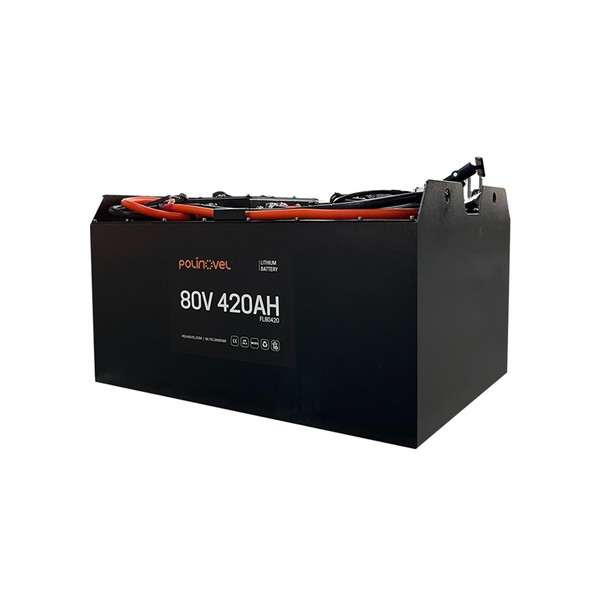
Lithium Golf Cart Batteries Worth Comparing in 2026
| Current model or platform | Manufacturer-listed strengths | Best-fit use | Limitation to check |
|---|---|---|---|
| Eco Battery Gen3 51V 105Ah Thru-Hole | IP67 steel enclosure, cart-specific installation options and limited-lifetime warranty | Buyers prioritizing a clean, model-specific conversion kit | Confirm the exact mounting kit, controller communication and items included in the quoted package |
| Trojan OnePack S2 48V 105Ah | Manufacturer-listed range up to 60 miles and a 10-year registered warranty | Standard carts where long range and established support matter | Published range is test-dependent; warranty registration and purchase date affect coverage |
| ROYPOW S51105 51.2V 105Ah | 5.38kWh, IP67, 100A continuous and 200A for 10 seconds | Stock or moderately loaded carts whose controller demand stays within those limits | The current rating may be insufficient for some upgraded controllers, steep routes or heavy multi-passenger builds |
| RELiON InSight 48V 30Ah modules | Parallel modular architecture, CAN communication and UL 2271/UL 2580-listed platform | Buyers who want scalable capacity in GC2-size modules | This is not a single 105Ah pack; two or more modules, spacers, charger and gauge affect installed cost |
| Bolt Energy 51.2V 105Ah High Output | 250A maximum continuous discharge and 520A peak for 30 seconds | Modified carts and high-current controller applications | Higher current capability may add cost without improving a stock cart's normal range |
| Dakota Lithium 48V 105Ah platform | Long warranty coverage and multiple 48V capacity options | Buyers placing high value on warranty duration and domestic support | Do not assume cold-weather charging capability unless the selected model explicitly includes heating or low-temperature charge protection |
| Polinovel 51.2V 105Ah platform | 5.376kWh, 200A discharge rating, CAN/RS485 options and configurable enclosure protection | OEM, private-label and fleet projects requiring electrical or mechanical customization | Specify the required IP rating, communication protocol, connector, mounting geometry and test documents in the purchase specification |
The most suitable model is the one that closes all four requirements: correct voltage, enough usable energy for the route, enough current for the controller and a conversion package that physically and electrically fits the cart. A battery should not receive a "best overall" label merely because it has the longest warranty or the largest Ah number.
For published reviews, separate manufacturer specifications from independently observed results. A manufacturer-listed range can help compare configurations, but terrain, tire diameter, passenger mass, speed, controller tuning, temperature and accessory loads can change the actual distance substantially.
How to Choose the Best 48V Lithium Golf Cart Battery
Start With Energy, Not Amp-Hours Alone
Most LiFePO4 products marketed as 48V golf cart batteries use a nominal voltage of 51.2V. A 100Ah pack therefore stores about 5.12kWh, while a 105Ah pack stores about 5.376kWh.
The difference is only 256Wh, or 5%. If both batteries have the same usable depth of discharge and are installed in the same cart, the 105Ah model should provide roughly 5% more range-not a dramatic increase. A cart that travels 40 miles with a 100Ah pack might gain about two miles under identical conditions.
| Specification | 51.2V 100Ah | 51.2V 105Ah | Purchasing implication |
|---|---|---|---|
| Nominal energy | 5.12kWh | 5.376kWh | 105Ah adds 256Wh |
| Relative capacity | Baseline | 5% higher | Expect about 5% more range under equal conditions |
| Hill-climbing power | Not determined by Ah | Not determined by Ah | Compare continuous and peak current ratings |
| Physical fit | Model-specific | Model-specific | Five extra Ah does not guarantee the enclosure will fit |
| Charging time | Depends on charger current | Approximately 5% longer with the same charger | Check charger output and battery charge limit |
Match the BMS to the Controller and Route
The controller's current demand is the first number to obtain for lifted, modified or multi-passenger carts. Compare it with the battery's continuous discharge rating and with every peak rating together with its permitted duration. "500A peak" is incomplete if the specification does not state whether that peak lasts 0.2 seconds, 2 seconds or 30 seconds.
A battery can show plenty of remaining capacity and still shut down on a hill when the BMS overcurrent threshold is lower than the controller's demand. The same failure can occur during regenerative braking if the pack cannot accept the returning charge current. For fleet or high-load projects, request the BMS trip threshold, delay time and automatic-recovery conditions rather than accepting a generic list of protections.
Verify the Complete Conversion System
For a Club Car Precedent or another model-specific conversion, confirm the model year, system voltage, tray dimensions, controller, motor, onboard-charger arrangement and key-switch wiring before ordering. Some installations also need a lithium charger, battery gauge, mounting bracket, cable set and 48V-to-12V DC-DC converter for lights, audio equipment or USB accessories.
Removing several lead-acid batteries also changes the mass distribution inside the tray. The replacement pack must be positively restrained; foam blocks or loose straps are not an acceptable substitute for a bracket designed for the pack's dimensions and expected vibration.
Selection Guide: Match Battery to Your Needs
Daily Commuter (5-10 miles/day): Allied Lithium offers the best value. You don't need maximum range, so save money on a reliable workhorse.
Weekend Golfer (36 holes/week): Eco Battery or RoyPow provide the capacity you need without overpaying for commercial-grade features.
Course Manager/Fleet Operator: RELiON InSight's monitoring capabilities and Bolt Energy's warranty make sense when managing multiple carts.
Performance Enthusiast: If you've modified your cart with a high-amp controller, ensure your battery can handle it. Allied and Eco both spec their maximum controller compatibility.
Budget-Conscious Buyer: Allied Lithium delivers 90% of the performance at 75% of the price of premium options.
Mountain/Hill Dweller: Higher capacity matters when climbing. RoyPow 120Ah or Trojan OnePack handle elevation better than standard 105Ah batteries.
Cost Reality Check: Total Investment Analysis
Most articles only tell you the battery price. Here's what you'll actually spend:
48V Lithium Battery: $2,200-$3,400
Installation Kit (if not included): $100-$200
Lithium-Compatible Charger: $200-$400 (your lead-acid charger won't work properly)
Professional Installation: $150-$300 (optional)
Total Initial Investment: $2,650-$4,300
Compare that to lead-acid replacement:
48V Lead-Acid Set: $800-$1,200
Annual Maintenance Costs: $50-$100 (distilled water, terminal cleaning)
Replacement Every 3-5 Years: $800-$1,200
10-Year Cost: $4,100-$6,500 (including replacements and maintenance)
Lithium 10-Year Cost: $2,650-$4,300 (one-time purchase, zero maintenance)
Actual Savings Over 10 Years: $1,450-$2,200
The math changes if you're a light user who only drives a few miles weekly. Lead-acid might make sense if your batteries currently last 6+ years. But for regular users, lithium pays for itself within 5-7 years.
What Fleet and OEM Buyers Should Require From a Supplier
A fleet or private-label purchase should be evaluated as a controlled battery project, not as a larger version of a retail order. For golf-course operators under NAICS 713910, resort transportation fleets and cart dealers, one incorrect connector, BMS threshold or mounting dimension can disable an entire batch even when every cell is electrically healthy.
The technical quotation should state nominal energy, usable depth of discharge, continuous current, peak current with duration, charge-current limit, low-temperature charge behavior, regenerative-current handling, connector type, enclosure dimensions, weight, IP configuration and CAN or RS485 protocol. It should also identify which items are included: charger, SOC display, DC-DC converter, cable set, mounting bracket and vehicle-specific harness.
Request the actual UN38.3 test summary for the finished battery type, not only a cell certificate or a logo on the specification sheet. UN38.3 supports lawful transport; it does not replace an application safety assessment. Depending on the market and vehicle classification, buyers may also request evidence against IEC 62619:2022, ANSI/CAN/UL/ULC 2271 or UL 2580. A CE claim should be supported by a Declaration of Conformity that identifies the applicable EU legislation; CE is not a generic third-party safety certificate.
For EU-bound packs, confirm how the supplier is preparing for Regulation (EU) 2023/1542. From February 18, 2027, battery-passport requirements apply to LMT batteries, electric-vehicle batteries and industrial batteries above 2kWh. The exact classification of a golf cart pack should be resolved for the destination market before labeling and data-system work begins.
Before approving a bulk order, validate a production-intent sample under the worst expected route: maximum passenger or cargo load, steepest grade, accessory load, hot and cold operating conditions and regenerative braking. Record pack current, minimum cell voltage, maximum cell temperature and any BMS event. The purchase order should then lock the approved BOM, firmware version, connector, enclosure drawing and test-document revision.
A useful commercial quotation separates sample lead time, production lead time, pilot-order MOQ and normal bulk MOQ. It should also state the warranty remedy, spare-parts availability, firmware support period and how engineering changes will be communicated after approval.
Frequently Asked Questions
How long do lithium golf cart batteries actually last?
Quality options among the best lithium golf cart batteries offer 3,000-5,000 charge cycles, translating to 8-10 years of use. Compare that to lead-acid batteries lasting only 500-1,000 cycles or 3-5 years. The key is "quality"-cheap Amazon brands may only deliver 2,000 cycles.
Can I just replace one battery in my set?
Never mix old and new batteries. Voltage imbalances force newer batteries to overcompensate for weaker ones, dramatically shortening their lifespan. Always replace all batteries simultaneously for consistent performance.
Do I need a special charger for lithium batteries?
Yes. Lead-acid chargers don't work properly with lithium chemistry. You need a charger specifically designed for LiFePO4 batteries. Expect to spend $200-$400, though some battery packages include compatible chargers.
How many miles will a 48V 105Ah battery give me?
Expect 40-50 miles on flat terrain with a standard 2-4 person cart. Hills reduce range by 20-30%. Add 200+ pounds of passengers and cargo, and you might see 30-40 miles. The Trojan OnePack consistently exceeds these numbers, reaching 60 miles.
What's the difference between storage-grade and EV-grade cells?
EV-grade cells are built for vehicles and offer better power delivery, cycle life, and safety. Storage-grade cells are cheaper but degrade faster under the discharge/charge stress of vehicle use. Many budget batteries advertise "100Ah" using 100Ah storage cells that perform like 85Ah in real-world conditions.
Will lithium batteries work in extreme cold?
Most lithium batteries lose 20-30% capacity below freezing. Dakota Lithium is engineered for cold weather, maintaining performance down to -4°F. If you live in cold climates, factor this into your decision-saving $300 on a cheaper battery means nothing if it won't work six months of the year.
Can I charge my lithium battery to 100% and leave it?
Modern BMS systems prevent overcharging, so you can leave it plugged in. However, for maximum longevity, store batteries long-term at 50-80% charge. If you're parking your cart for winter, charge to 50%, disconnect, and store in a cool, dry place.
Are cheap Amazon lithium batteries worth it?
Brands like DC House, Enjoybot, and LiTime cost $1,000-$1,500 but use subpar components. Users report premature failures, thermal issues, and warranties that aren't honored. Saving $1,000 upfront isn't worth the risk when you're talking about a 300+ pound vehicle.
What Is the Best 48V Lithium Battery for a Golf Cart?
The best 48V lithium golf cart battery is a 51.2V LiFePO4 pack that fits the battery tray, supports the cart controller's continuous and peak current demand, accepts regenerative current where required and uses an approved lithium charger. A 100–105Ah pack suits many stock carts, but it is not automatically suitable for lifted, six-passenger or high-output builds. Those applications require controller-current data and a model-specific fitment check before capacity is selected.
Is a 105Ah Golf Cart Battery Better Than a 100Ah Battery?
At 51.2V, a 105Ah battery stores 5.376kWh while a 100Ah battery stores 5.12kWh. The difference is 256Wh, or 5%, so the expected range gain is also about 5% under the same load and usable depth of discharge. The larger Ah rating does not prove that the battery can climb steeper hills; that depends on continuous current, peak current, peak duration and BMS trip settings.
What Compliance Documents Should a Lithium Golf Cart Battery Supplier Provide?
A supplier should provide a UN38.3 test summary for the finished battery type before shipment; UN38.3 confirms transport testing, not complete in-use product safety. Depending on the destination and vehicle classification, buyers may also require IEC 62619:2022, ANSI/CAN/UL/ULC 2271 or UL 2580 evidence. For EU sales, request the applicable Declaration of Conformity and verify whether the pack falls within the 2027 battery-passport requirements under Regulation (EU) 2023/1542.
Bottom Line: Which of the Best Lithium Golf Cart Batteries Should You Buy?
For most users, Allied Lithium 48V 105Ah ranks among the best lithium golf cart batteries for its combination of performance, reliability, and value. You get proven technology from a company that's sold thousands of units, backed by real customer feedback.
If money isn't your primary concern and you want maximum range, Trojan OnePack justifies its premium price with industry-leading distance per charge and a century-old company standing behind it.
For first-time lithium buyers who want installation to be painless, Eco Battery removes the guesswork with superior installation design and cutting-edge features.
The worst decision? Buying based solely on price. A $1,000 battery that fails in three years costs more than a $2,500 battery lasting ten years. When choosing the best lithium golf cart batteries, do the math on total ownership cost, not just sticker price.
Your golf cart deserves better than those heavy, slow-charging lead-acid batteries. Choose wisely from these best lithium golf cart batteries, and you'll wonder why you didn't make the switch years ago.


