


What is Cell Balancing
Cell balancing equalizes the voltage and state of charge across individual cells in a battery pack. This process prevents some cells from becoming overcharged while others remain undercharged, which otherwise limits the pack's total usable capacity and accelerates degradation.
The technique applies primarily to lithium ion battery pack configurations where cells connect in series. When one cell reaches its voltage limit during charging or discharging, the entire pack must stop operating-even if other cells have remaining capacity.
Why Battery Packs Need Cell Balancing
Manufacturing variations create cells with slightly different capacities, impedances, and self-discharge rates. Even cells from the same production batch exhibit these differences. Over repeated charge-discharge cycles, these small variations compound into significant imbalances.
An unbalanced pack can deliver 10% less than nameplate capacity on every cycle, locking away energy that users paid for while increasing degradation on every cell. The math is straightforward: in a 1000 kWh system with 100 series cells, if one cell sits at 90% state of charge while others reach 100%, the entire pack can only access 900 kWh despite storing 999 kWh.
Temperature gradients worsen the problem. Cells near motors or electronics experience higher temperatures, which changes their internal chemistry differently than cooler cells. This environmental factor creates ongoing imbalance even after initial balancing.
Imbalanced cells can reduce battery pack lifespan by up to 30%, especially in chemistries like LiFePO4 or NMC. The weakest cell determines when charging must stop and when discharging hits its limit-a phenomenon engineers call the "weakest link" effect.
How Cell Imbalance Develops
Three primary mechanisms drive cells out of balance in a lithium ion battery pack:
State of charge differences emerge when cells start with unequal charge levels during assembly or develop different self-discharge rates. A cell discharging 0.1% faster than its neighbors will drift 4.4% lower after repeated cycles, as documented in battery chemistry research.
Capacity mismatches occur because no two cells have identical energy storage capability. Manufacturing processes create cells with 2-5% capacity variance even within tight specifications. As cells age at different rates, this variance increases.
Impedance variations cause cells to respond differently to current flow. Higher internal resistance in some cells means they reach voltage limits sooner during charging and drop to cutoff voltages faster during discharge.
If maximum charging voltage is exceeded by just 10%, the degradation rate increases by 30%. This exponential relationship between voltage and degradation makes precise balancing critical for longevity.
Passive Cell Balancing: The Dissipative Approach
Passive balancing removes excess energy from higher-charged cells by dissipating it as heat through resistors. The system monitors each cell's voltage and activates bypass resistors to bleed off charge from cells above the target level.
The hardware is straightforward: each cell connects to a shunt resistor through a switch, typically a MOSFET. When the battery management system detects a cell voltage exceeding the threshold, it closes that cell's switch, routing current through the resistor until voltages equalize.
In a typical passive cell balancing circuit for a 4S to 16S lithium pack, each cell channel consists of three core components: a bleeding resistor (commonly 33Ω to 68Ω at 0.25–0.5W rating), an N-channel MOSFET acting as the controlled switch, and a gate drive signal from the monitor IC. When the IC identifies that a particular cell sits above the pack's reference voltage, it pulls the MOSFET gate high. Current then flows from the positive terminal of that cell, through the resistor, through the MOSFET drain-to-source path, and returns to the cell's negative terminal. The energy dissipates as heat in the resistor-and to a lesser extent in the MOSFET's on-resistance, which is typically below 100 mΩ for the low-side switches used in these circuits.
The resistor value sets a direct tradeoff. A lower resistance (say 22Ω) yields a higher bleed current-around 150 mA at 3.3V cell voltage-and faster equalization, but it also generates more heat within the module enclosure. In tightly packed battery configurations where thermal headroom is limited, designers choose higher resistance values to keep heat generation under control at the cost of longer balancing windows. Some battery cell balancing circuit designs add a thermistor on or near the bleed resistor, feeding temperature data back to the BMS so it can throttle balancing current if local temperatures rise too high. This closed-loop thermal management is uncommon in budget BMS boards but standard in industrial-grade systems where the pack operates continuously at high loads.
Operating parameters: Typical passive systems use bypass currents between 50-200 mA. The balancing resistor value determines how quickly excess charge dissipates-common values range from 20-100 ohms for lithium-ion applications.
The method works best during charging when the pack has an external power source. In lithium-ion batteries with very low self-discharge, where accumulative unbalance per cycle is usually less than 0.1%, bypass current of internal FETs is sufficient to keep the pack continuously balanced.
Advantages: Low cost, simple circuitry, and high reliability make passive balancing the standard choice for consumer electronics and small battery packs. The components integrate easily into existing battery management systems without major design changes.
Passive balancing remains the default for lithium ion cell balancing below 48V because the math favors simplicity. In a 7S pack where cells drift by 30–50 mV over 200 cycles, a 68Ω bleed resistor drawing 50 mA corrects that drift in under two hours per charge session. The energy wasted per balancing event amounts to roughly 0.15 Wh per cell-negligible compared to the 5–10% capacity gain the pack recovers by keeping all cells within tight voltage alignment. For applications like power tools, e-bikes, and portable medical devices, this passive cell balancing approach hits the sweet spot where the cost of lost energy during bleed-off is far less than the cost of the additional power electronics that active methods demand.
Limitations: Energy waste is the primary drawback-100% of excess charge converts to heat rather than transferring to depleted cells. This reduces overall system efficiency and limits passive balancing to applications where time isn't constrained. During discharge, passive balancing shortens runtime because it only removes energy rather than redistributing it.
Active Cell Balancing: Energy Redistribution
Active balancing transfers charge from higher-voltage cells to lower-voltage cells using power electronics. Instead of wasting energy as heat, the system moves it to where it's needed.
Three main topologies handle charge transfer:
Capacitive shuttling uses capacitors as temporary energy storage. The system connects a capacitor to a high-voltage cell, charges it, then switches it to a low-voltage cell for discharge. This happens repeatedly until cells equalize. The method works well for adjacent cells but becomes inefficient over longer distances in the pack.
Inductive balancing employs inductors or transformers to transfer energy between cells. DC-DC converters handle the voltage conversion required to move charge from one cell to another. Recent research shows a hybrid duty cycle balancing method achieved equalization in 6.0 hours compared to 9.2 hours for conventional methods during charging.
Bidirectional DC-DC converters offer the most flexible approach, allowing energy transfer in either direction between any cells in the pack or between individual cells and the entire pack. This topology handles large current flows-modern systems support 2.5-10A balancing currents depending on the converter design.
State-of-Power based balancing algorithms improved usable capacity by 16% compared to packs without balancing. The newer SoP approach balances based on actual power capability rather than just voltage or state of charge, which proves particularly effective for aged batteries with different capacities.
Performance metrics: Active systems typically achieve 85-95% energy transfer efficiency. The complexity involves more components-switches, inductors, capacitors, and control circuitry-which increases both cost and physical space requirements.
From a circuit implementation standpoint, the most widely adopted active cell balancing circuit in production BMS boards uses the switched-inductor topology. Each pair of adjacent cells shares a small inductor (typically 10–47 µH) and two MOSFETs. The controller alternates the gate signals: during the first half-cycle, current flows from the higher-voltage cell through the inductor, storing energy in its magnetic field. During the second half-cycle, the stored energy releases into the adjacent lower-voltage cell. The switching frequency usually falls between 50–200 kHz, high enough to keep inductor size small but low enough to limit switching losses.
For systems requiring charge transfer across non-adjacent cells-common in large battery packs for grid storage or heavy equipment-the flyback converter topology is more practical. A multi-winding transformer allows any single cell to transfer energy to the entire pack bus, or the pack bus to feed a depleted cell, regardless of physical position. This cell-to-pack architecture eliminates the cascading delay that adjacent-cell methods suffer when moving charge across many cells in series. The tradeoff is transformer size and cost: each cell tap needs its own secondary winding, and the transformer core must handle the peak flux without saturation. Active balancing technology based on flyback converters dominates in applications above 48V where the speed advantage over adjacent-cell shuttling justifies the added BOM cost.
When to use active balancing: Large-format lithium ion battery packs for electric vehicles, grid storage systems, and industrial equipment justify the higher cost. The improved efficiency and faster balancing times provide better return on investment when pack capacity exceeds 10 kWh or when rapid turnaround matters operationally.
How a BMS Executes Cell Balancing at the Hardware Level
The battery management system architecture responsible for cell balancing in a lithium ion pack is not a single chip-it's a layered architecture. Most production-grade systems follow a master-slave topology. Slave boards sit directly on each battery module, measuring individual cell voltages and temperatures through dedicated monitor ICs. The master controller aggregates this data, runs the balancing algorithm, and issues commands back to the slaves over an isolated communication bus.
At the component level, each slave board relies on a multicell battery monitor IC to sample voltages. These ICs measure anywhere from 6 to 18 series-connected cells per device, with total measurement error below 1.5 mV in well-designed systems. For a BMS managing cell balance across a 96-cell EV pack, eight or more monitor ICs chain together through daisy-chain or addressable bus configurations. The monitor IC handles analog-to-digital conversion for every cell tap, while also driving the gate signals that control balancing switches for each channel.
Communication between the slave modules and the master controller typically runs over CAN bus in automotive and industrial applications, or I2C for smaller consumer packs. CAN offers the noise immunity needed in electrically noisy environments near motors and inverters, which is why most battery management systems designed for electric vehicle cell balancing default to this protocol. The master controller-often a dedicated microcontroller or DSP-executes the SOC estimation model, decides which cells need charge redistribution, and sends back the duty cycle or on/off commands that the slave boards translate into MOSFET gate signals.
This layered approach matters because the BMS does more than balance. Overcurrent protection, overvoltage cutoff, undervoltage lockout, and thermal shutdown all share the same monitoring hardware. When the monitor IC detects a cell voltage exceeding the safe ceiling, it can independently trigger a protection response within microseconds-far faster than the master controller's polling cycle. The balancing function and the protection function share sensor data but operate on different time scales: protection acts in microseconds, while the battery pack balancing algorithm works across minutes or hours. Understanding this separation helps explain why a BMS can still protect cells even if the balancing routine encounters a software fault.
For engineers selecting a BMS for battery pack balancing in industrial equipment such as forklifts, AGVs, and mining vehicles-the key specification to evaluate is the balancing current-to-capacity ratio. A 100 mA passive balancing current works fine on a 10 Ah pack (1% of capacity), but on a 400 Ah forklift battery it represents only 0.025% of capacity, which means correcting even a 2% SOC spread could take days of continuous charging. Industrial battery management systems address this by either scaling up passive balancing currents to 500 mA–1A with appropriately rated resistors and thermal management, or by integrating active balancing modules capable of moving 2–5A between cells. The BMS specification sheet should list both the maximum balancing current and the number of cells it can balance simultaneously-some lower-cost designs balance cells sequentially rather than in parallel, which multiplies equalization time by the number of imbalanced cells.
Balancing Algorithms and Control Strategies
The battery management system determines when and how aggressively to balance cells based on several parameters:
Voltage-based balancing triggers when cell voltage differences exceed a threshold, typically 10-50 mV for lithium-ion chemistries. The BMS identifies the lowest cell voltage, then balances all cells within a defined range of that minimum. This simple approach works reliably but doesn't account for capacity differences between cells.
State of charge balancing uses SOC estimation algorithms to determine each cell's charge level relative to its maximum capacity. This method proves more accurate than voltage-based approaches because it accounts for capacity variations. The BMS balances toward equal SOC percentages rather than equal voltages.
State of power balancing represents the newest approach, particularly relevant as batteries age. This method suits aged batteries with different capacities because it balances based on actual charge rather than relying solely on SOC percentage or voltage values.
Timing matters: balancing during charging makes the most sense for passive systems since an external power source is available. Active systems can balance during charging, discharging, or rest periods. Some advanced BMS designs implement continuous balancing, adjusting cell charges whenever the pack operates.
Configuration thresholds: Start balancing voltage typically sets around 3.5V for lithium iron phosphate cells, which indicates roughly 5-10% state of charge. Maximum voltage difference between cells usually targets 10 mV, though some applications use 20 mV for faster bulk balancing before refining to tighter tolerances.
Cell Balancing in Electric Vehicle Applications
Electric vehicles present the most demanding cell balancing requirements due to high power levels, wide temperature ranges, and frequent charge-discharge cycles.
A typical EV battery pack contains 96-400 cells in series, often organized into modules of 24 parallel-connected cells. The parallel cells within each module naturally balance, but the series-connected modules require active management.
The active cell balancing market reached $1.41 billion in 2024 and projects growth at 18.2% annually through 2033. This expansion directly correlates with electric vehicle production scaling globally, particularly in Asia where China, Japan, and South Korea lead both in manufacturing and adoption.
Performance requirements: EV balancing systems must handle 100+ cells, operate across temperature ranges from -20°C to 60°C, and respond within seconds to rapid power demands during acceleration and regenerative braking.
Experimental validation of advanced balancing topologies achieved SOC convergence in approximately 400 seconds for a four-cell series pack during discharge operation. Scaling this to production EV packs with 96+ cells requires sophisticated control algorithms and high-efficiency power electronics.
The automotive industry primarily uses passive balancing despite active systems' superior performance. Cost sensitivity in consumer vehicles, combined with adequate passive balancing for most driving patterns, makes the simpler approach economically attractive. However, high-performance EVs and commercial vehicles increasingly adopt active balancing for its efficiency gains.
Cell balancing in electric vehicles also has to contend with regenerative braking-a scenario absent in stationary storage. During regenerative events, high pulse currents flow back into the pack for fractions of a second, creating transient voltage spikes that differ across cells based on their individual impedance. A BMS handling cell balancing in electric vehicles must distinguish these transient spikes from genuine SOC imbalances to avoid triggering unnecessary balancing actions. Most automotive BMS designs address this by applying a low-pass filter to voltage measurements or by requiring voltage deltas to persist across multiple consecutive sampling windows before initiating balancing. This filtering logic adds complexity but prevents the system from chasing phantom imbalances caused by normal driving dynamics.

Impact on Battery Lifespan and Safety
Proper cell balancing extends battery life through multiple mechanisms:
Reduced stress on individual cells: When all cells operate near the same SOC, no single cell experiences repeated overcharge or deep discharge events. This uniform treatment slows capacity fade across the entire pack.
Temperature management: Balanced cells generate more uniform heat distribution. Imbalanced packs develop hot spots where overcharged cells dissipate more energy, creating thermal gradients that accelerate aging in the affected areas.
Voltage compliance: Keeping cells within optimal voltage ranges prevents formation of lithium metal plating on anodes during overcharge and avoids copper dissolution during over-discharge. Both conditions permanently reduce cell capacity.
Battery packs with well-matched cells and proper balancing show strong correlation between cell balance and longevity, with capacity mismatch of 12% causing the greatest performance decrease over 18 cycles.
Safety implications extend beyond performance:
Overcharged lithium cells risk thermal runaway-a chain reaction where rising temperature causes chemical reactions that generate more heat. The positive feedback loop can lead to fire or explosion. Cell balancing prevents individual cells from reaching dangerous overvoltage conditions even if other cells in the pack remain at safe levels.
The BMS integrates cell balancing with several independent protection layers that share the same monitoring hardware. Overvoltage protection triggers when any cell exceeds a hard ceiling-typically 3.65V for LiFePO4 or 4.25V for NMC-by commanding the charge MOSFET to disconnect the charging source within milliseconds. Undervoltage protection works in reverse during discharge, cutting the load path before any cell drops below 2.5–2.8V. Overcurrent and short-circuit detection use shunt resistors or Hall sensors on the main bus, comparing measured current against programmed thresholds.
What makes this integration critical for battery management and cell longevity is the hierarchy of response times. The protection functions operate on a microsecond scale because they address acute hazards. The cell balancing function, by contrast, operates across minutes to hours because it corrects gradual drift. A well-designed BMS in a battery management system ensures these two functions never conflict-for example, it suspends balancing operations when pack temperature exceeds a thermal threshold or when the charger delivers pulsed current that could interfere with voltage sampling accuracy. This coordination between fast protection and slow equalization is what separates a production-quality BMS from hobbyist-grade boards that treat balancing and protection as entirely separate subsystems.
Physical warning signs of severe imbalance include cell swelling, heat generation during charging, and rapid voltage drops during use. These symptoms indicate the pack needs immediate service or replacement to prevent safety incidents.
Balancing Requirements for Different Applications
Different use cases demand different balancing approaches:
Consumer electronics (phones, laptops, power tools): Passive balancing suffices for packs under 24V with 6-8 cells in series. The low cost matches the application's price sensitivity, and charging periods provide adequate time for passive systems to equalize cells.
Electric vehicles: Active balancing becomes cost-effective for packs above 400V with hundreds of series cells. The faster balancing and higher efficiency justify the additional electronics complexity.
Grid energy storage: Massive battery systems storing megawatt-hours of energy require sophisticated active balancing. The battery cell balancing system market reached $1.82 billion in 2024 and projects 18.7% growth through 2033, driven largely by utility-scale storage deployments.
Aerospace and medical devices: These applications demand the highest reliability and often specify active balancing regardless of cost. The consequences of battery failure in aircraft or life-support equipment justify premium solutions.
Top-Balancing vs Bottom-Balancing Strategies
Two philosophies guide how engineers set balancing targets:
Top balancing equalizes cells when fully charged, ensuring all cells reach 100% SOC simultaneously. This approach maximizes available capacity during each discharge cycle. E-bike and solar storage systems often use top balancing because users prefer full capacity availability over protecting against deep discharge.
Bottom balancing equalizes cells at low states of charge, ensuring all cells reach empty simultaneously. This strategy provides better protection against over-discharge damage and works well for applications with frequent shallow cycles rather than deep discharges.
The choice depends on usage patterns and priorities. Applications emphasizing capacity (like electric vehicles with range anxiety) favor top balancing. Applications prioritizing longevity and safety (like backup power systems) often choose bottom balancing.
Some advanced systems implement hybrid approaches, balancing at both full and empty states to optimize both capacity and longevity.
Charge Balancing vs Load Balancing in Battery Systems
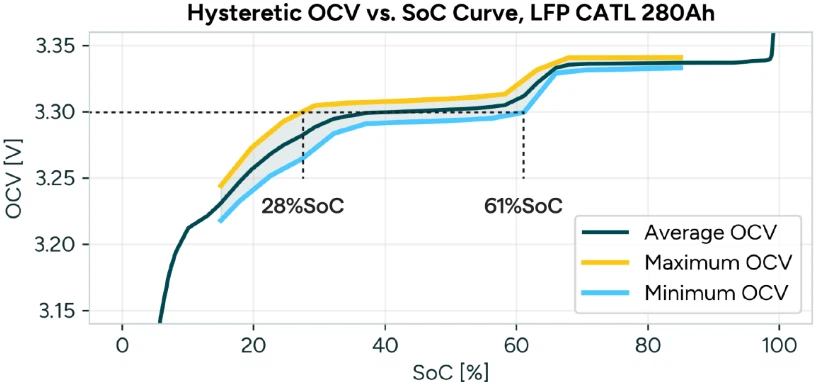
The term "charge balancing" sometimes appears interchangeably with cell balancing, but it carries a narrower meaning in engineering practice. Charge balancing specifically refers to equalizing the coulombic content-the actual stored ampere-hours-across cells during the charging phase. A BMS performing charge balancing monitors coulomb counting data alongside voltage readings to determine which cells have accepted less charge than their neighbors, then adjusts bypass or transfer currents accordingly. This is distinct from voltage-based equalization, which can mask genuine capacity differences when cells sit on the flat portion of their discharge curve, particularly with LiFePO4 chemistry.
Load balancing in a battery context addresses a different problem. In packs with parallel cell groups feeding multiple inverters or motor controllers, load balancing ensures that no single branch carries a disproportionate share of the discharge current. Uneven current distribution across parallel strings accelerates aging in the overloaded branch and underutilizes capacity in the lighter-loaded ones. The BMS handles this through current-sense resistors or Hall-effect sensors on each parallel path, adjusting contactors or electronic switches to redistribute the load. While load balancing for high-power battery packs operates at the string level rather than the individual cell level, it complements cell-level charge balancing to maximize overall pack utilization. Both functions coexist within the same battery management system, sharing sensor infrastructure but running independent control loops.
Recent Advances in Balancing Technology
Research published in 2024-2025 demonstrates several emerging directions:
Machine learning integration: Recent studies combine active balancing with machine learning models for predicting remaining useful life, using R-squared and mean error metrics to evaluate seven different prediction algorithms. This integration allows proactive balancing adjustments based on predicted cell aging patterns.
Reduced component designs: Novel inductor-based balancing circuits using reduced switch counts show effectiveness through real-time hardware-in-loop simulation on OPAL-RT 5700 systems. These simplified topologies lower cost while maintaining performance.
AI-based battery management systems: Future development focuses on systems using real-time data for wireless monitoring, providing accurate insights into battery health, SOC, and fault detection. The goal is minimizing downtime while ensuring efficient energy use.
State-of-Power algorithms: Moving beyond voltage and SOC-based approaches, newer algorithms consider each cell's power delivery capability. This proves particularly valuable as batteries age and cell characteristics diverge from their original specifications.
The global cell balancing IC market reached $1.32 billion in 2024, with projected growth to $2.51 billion by 2033 at a 7.4% compound annual growth rate. This market expansion reflects increasing sophistication in balancing solutions across all application segments.
Practical Implementation Considerations
Engineers designing battery packs must balance multiple factors:
Before diving into design tradeoffs, it helps to trace how balancing cells in a battery pack actually unfolds during a charge cycle. Consider a 16S LiFePO4 pack reaching the end of constant-current charging. As cells approach 3.55V, the BMS monitor IC on each slave board samples all 16 cell taps every 100–250 ms. Once any single cell crosses the start-balancing threshold-often set at 3.50V for iron phosphate-the BMS flags the pack as "in balancing mode." It identifies the lowest cell voltage in the string, then activates the bypass MOSFET on every cell whose voltage exceeds the lowest by more than the configured delta, typically 10–20 mV.
From this point, the balancing algorithm enters a regulate-and-settle loop. The BMS keeps bypass switches closed for a set interval (often 30–60 seconds), then opens all switches and waits several seconds for cell voltages to settle under zero-current conditions. It re-samples, recalculates the spread, and activates switches again only for cells still outside the target window. This intermittent approach prevents over-correction and accounts for the fact that cell voltage under load doesn't represent true open-circuit equilibrium. The cycle repeats-sometimes across multiple full charge sessions-until the pack converges within the defined tolerance. For a 16-cell pack with 50 mV initial spread and 100 mA passive balancing current, reaching 10 mV convergence can take 4–8 hours depending on cell capacity and temperature.
Balancing current vs speed: Higher balancing currents equalize cells faster but generate more heat and require more robust components. Typical specifications range from 50 mA for small passive systems to 10A for large active systems.
Component selection: MOSFETs for passive balancing need appropriate current ratings and low on-resistance. Active balancing requires careful inductor and capacitor selection to achieve target efficiency levels while managing size and cost constraints.
Thermal management: Even passive balancing generates heat that must dissipate without affecting nearby cells. Active systems produce less heat per cell but concentrate it in power electronics that need dedicated cooling.
BMS integration: The balancing hardware must communicate with the overall battery management system, sharing voltage and temperature data while receiving control commands. Standard protocols like CAN bus facilitate this integration.
Measuring Balancing Effectiveness
Several metrics evaluate balancing system performance:
Balancing time: How long to bring all cells within the target voltage or SOC range. Passive systems typically require hours, while active systems achieve results in minutes to a couple of hours depending on imbalance severity.
Energy efficiency: What percentage of redistributed energy reaches lower-charged cells versus dissipating as losses. Active systems achieve 85-95%, passive systems approach 0% by definition since they only dissipate.
Capacity retention: Does the balancing strategy maintain pack capacity over hundreds of cycles? Well-designed systems show less than 5% capacity loss over 500 cycles at recommended operating conditions.
Temperature rise during balancing: Excessive heating indicates either inadequate thermal design or overly aggressive balancing parameters requiring adjustment.
Testing protocols often involve creating intentional imbalances, then measuring how quickly and effectively the system corrects them under various temperature and load conditions.
Common Cell Balancing Mistakes
Several pitfalls reduce balancing effectiveness:
Incorrect threshold settings: Setting the maximum voltage difference too small creates a race condition where the BMS constantly switches between cells without making progress. Most systems work best with 10-20 mV thresholds rather than attempting sub-5 mV precision.
Balancing during discharge with passive systems: This wastes battery capacity by dissipating energy that could power the load. Passive balancing should occur primarily during charging or rest periods.
Ignoring temperature effects: Cell voltage varies with temperature, and balancing based on voltage measurements without temperature compensation leads to errors. Quality BMS designs incorporate temperature correction factors.
Over-reliance on balancing: Balancing helps but doesn't fix fundamental problems like failed cells or severe capacity degradation. When cells differ by more than 15-20% in capacity, balancing alone won't restore pack performance-cell replacement becomes necessary.
Inadequate balancing specifications: Consumer products sometimes skimp on balancing capability to reduce costs, leading to reduced capacity and early failures. Industrial and automotive applications typically specify more robust balancing to ensure longevity.
Cell Balancing for Different Battery Chemistries
While lithium-ion applications dominate cell balancing discussions, different chemistries have distinct requirements:
Lithium iron phosphate (LiFePO4) chemistry and its unique cell balancing requirements: The flat voltage curve during most of the charge cycle makes voltage-based balancing less effective. SOC-based algorithms work better, though LiFePO4's higher self-discharge compared to other lithium chemistries requires more frequent balancing.
Nickel manganese cobalt (NMC): The linear discharge curve and clear voltage-SOC relationship make both voltage-based and SOC-based balancing effective. Temperature sensitivity requires careful thermal management during balancing.
Lead-acid batteries: These rugged batteries tolerate parallel-connected reservoir cells for balancing. The chemistry's resilience allows simpler, cruder balancing methods than lithium-ion batteries permit.
Each chemistry's voltage characteristics, temperature sensitivity, and safety margins dictate optimal balancing parameters and methods.

Directions in Cell Balancing
The field continues evolving as battery technology advances:
Solid-state batteries: When solid-state lithium batteries reach commercialization, their different electrical characteristics may require new balancing approaches. The lack of liquid electrolyte changes failure modes and aging patterns.
Wireless balancing: Research explores capacitive or inductive power transfer between cells without direct electrical connections, potentially simplifying pack design and reducing wiring complexity.
Self-balancing cells: Some manufacturers investigate building basic balancing circuitry directly into individual cells rather than at the pack level, distributing the balancing function throughout the battery.
Predictive balancing: Rather than reactive balancing when imbalances appear, predictive algorithms could pre-emptively adjust cell charges based on anticipated usage patterns and aging trajectories.
These developments aim to improve reliability, reduce cost, and extend battery lifespan as energy storage becomes increasingly central to transportation and grid infrastructure.
Frequently Asked Questions
Does every battery pack need cell balancing?
Only packs with cells in series require balancing. Single-cell batteries and parallel-only configurations naturally balance through their direct connections. However, nearly all lithium ion battery pack designs with more than one cell in series benefit from some form of balancing as the cells age and characteristics diverge.
How often should a battery pack balance?
Modern battery management systems balance automatically during every charge cycle when voltage differences exceed thresholds. The pack doesn't require manual intervention. For optimal longevity, allowing the BMS to fully balance cells every 10-20 cycles by completing a full charge helps maintain consistency.
Can you over-balance a battery pack?
Excessive balancing can cause problems. Overly aggressive passive balancing wastes energy and generates unnecessary heat. Very frequent active balancing increases component wear and produces small additional aging from the charge transfer cycles. Well-designed systems balance only when needed, finding equilibrium between correction and efficiency.
What causes cell balancing to fail?
Component failures, incorrect BMS settings, severe cell degradation, or manufacturing defects in the balancing circuitry can prevent effective balancing. Temperature extremes may also inhibit proper operation-most systems pause balancing if pack temperature exceeds safe limits to prevent thermal stress.
Cell balancing stands as a fundamental requirement for modern battery technology, particularly in lithium ion battery pack applications spanning electric vehicles to renewable energy storage. The technique's evolution from simple passive resistor networks to sophisticated active charge redistribution systems reflects the growing demands placed on battery performance and longevity. As the global transition toward electrification accelerates, expect continued innovation in balancing methods that squeeze maximum capability from each cell while ensuring safe, reliable operation across thousands of charge cycles.


