


What is LiFePO4?
LiFePO4 is a rechargeable battery technology using lithium iron phosphate as its cathode material. This chemistry delivers exceptional safety, cycle life exceeding 3,000 charges, and thermal stability that traditional lithium-ion batteries cannot match.
What Is a Lithium Iron Phosphate Battery?
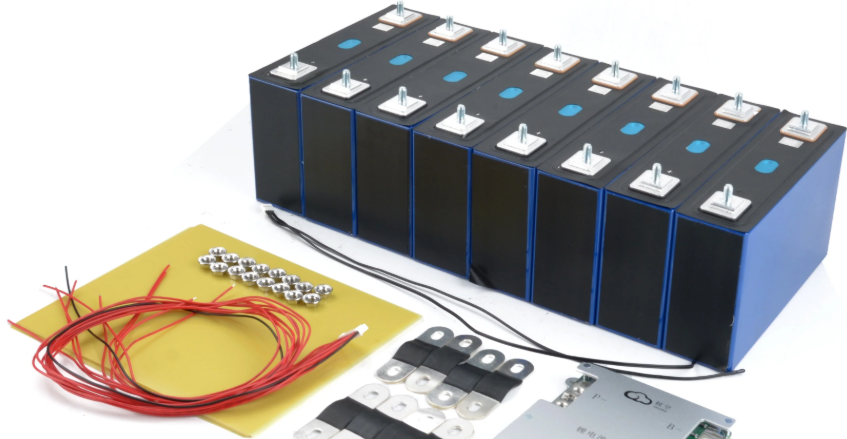
A lithium iron phosphate battery - commonly referred to as a LiFePO₄ battery or LFP battery - is a type of rechargeable lithium-ion battery that uses lithium iron phosphate (LiFePO₄) as its cathode material and graphitic carbon as the anode. Each cell produces a nominal voltage of 3.2V, and four cells wired in series form the standard 12.8V configuration used across most commercial applications.
What sets lithium iron phosphate batteries apart from other lithium-ion chemistries like NMC (nickel manganese cobalt) or NCA (nickel cobalt aluminum) is a combination of three characteristics that matter most in demanding operational environments: thermal stability, cycle longevity, and total cost of ownership.
The olivine crystal structure of LiFePO₄ creates exceptionally strong phosphate-oxygen bonds that resist decomposition even under extreme heat or overcharge conditions. Where cobalt-based lithium cells risk thermal runaway at elevated temperatures, lithium iron phosphate cells remain structurally intact - they do not release oxygen to feed combustion. This inherent chemical stability is why LFP has become the preferred chemistry for applications where battery packs operate in enclosed or hard-to-access spaces, from forklift compartments and mining vehicles to airport ground support equipment.
In terms of cycle performance, quality lithium iron phosphate battery packs consistently deliver 3,000 to 5,000 full charge-discharge cycles while retaining 80% of their original capacity. Under controlled conditions, some cells exceed 10,000 cycles. By comparison, NMC batteries typically support 1,000 to 2,300 cycles, and traditional lead-acid batteries manage 300 to 500 cycles before replacement. For fleet operators running multi-shift operations - where batteries cycle daily or even multiple times per day - this difference translates directly into lower replacement frequency and reduced downtime over a 10-year equipment lifecycle.
The raw materials used in lithium iron phosphate batteries also contribute to their growing adoption. Iron and phosphate are among the most abundant elements in the Earth's crust, and the chemistry requires neither cobalt nor nickel. This eliminates the supply chain constraints and ethical sourcing concerns associated with those metals, while keeping cell-level costs competitive. As of 2024, LFP cells are available at approximately $56–70 per kWh at scale, making them the most cost-effective lithium-ion option for high-capacity industrial battery packs.
Across the material handling, electric vehicle, and industrial equipment sectors, lithium iron phosphate battery technology has moved from an alternative chemistry to the default choice for applications that prioritize operational reliability over maximum energy density. Polinovel's LiFePO₄ battery packs are engineered around this chemistry, integrating advanced BMS protection with cells selected for the specific discharge profiles and environmental conditions of forklifts, reach trucks, golf carts, AGVs, and other commercial equipment.
Understanding LiFePO4 Battery Chemistry
The fundamental structure of LiFePO4 batteries consists of three primary components working in electrochemical harmony. The cathode uses lithium iron phosphate (LiFePO4), the anode employs graphitic carbon, and lithium ions shuttle between these electrodes through a separator membrane.
What makes this chemistry particularly interesting is the iron phosphate compound itself. The strong covalent bonding within the (PO4)³⁻ polyanion reduces the covalent bonding to iron ions, lowering the redox energy to achieve a nominal voltage of 3.2V per cell. This differs from lithium cobalt oxide cells at 3.7V or lithium nickel manganese cobalt oxide configurations.
During charging, lithium ions migrate from the iron phosphate cathode through the electrolyte to embed themselves in the graphite anode's layered structure. When you discharge the battery by connecting a load, these ions reverse direction, traveling back to the cathode while electrons flow through the external circuit to deliver power. The beauty of this mechanism lies in its structural stability-the olivine crystal structure of LiFePO4 experiences minimal volume change during these ion movements, contributing to remarkable cycle longevity.
How LiFePO4 Differs from Standard Lithium-Ion
The distinction between LiFePO4 and conventional lithium-ion batteries goes beyond chemistry labels. Standard lithium-ion batteries typically use cobalt oxide (LiCoO₂), manganese oxide (LiMn₂O₄), or nickel-based compounds as cathode materials. These deliver higher energy density-meaning more power per kilogram-but at a cost.
LiFePO4 trades approximately 14% less energy density for substantially better safety characteristics. The iron phosphate structure remains stable at temperatures where cobalt-based cells enter thermal runaway. While a smartphone battery might explode if punctured or overcharged, LiFePO4 cells maintain their integrity. They're essentially incombustible under normal failure conditions.
The chemistry also eliminates both cobalt and nickel-elements that raise environmental concerns and supply chain complications. Iron and phosphates are abundant in Earth's crust, making LiFePO4 considerably less expensive to produce. A 2020 Department of Energy analysis found LiFePO4 batteries cost roughly 6% less per kilowatt-hour than NMC alternatives, with the gap widening as manufacturing scales up.
Market Growth and Industry Adoption
The global LiFePO4 battery market reached $17.2 billion in 2024 and is projected to grow at a 15.7% compound annual rate through 2034, hitting $73.68 billion. This isn't speculative growth-it reflects fundamental shifts in how industries think about energy storage.
Tesla switched its utility-scale batteries to LiFePO4 in 2021. The company now uses LFP chemistry in all standard-range Model 3 and Model Y vehicles manufactured after October 2021. BYD, the world's second-largest electric vehicle manufacturer, has similarly committed to the chemistry. Together, these two companies deployed 68% of all LFP batteries in the EV market as of September 2022, when LFP captured 31% of the entire electric vehicle battery market.
Chinese manufacturers currently dominate production, controlling approximately 90% of global LFP manufacturing capacity. This concentration partly stems from early patent protection that limited Western development, though key patents began expiring in 2022. Ford announced plans in February 2023 to invest $3.5 billion in a Michigan factory producing LFP batteries for its electric vehicle lineup-a signal that Western manufacturers recognize the chemistry's value proposition.
The stationary energy storage sector shows equally dramatic adoption. Companies like Enphase pioneered residential LFP systems and surpassed Tesla and LG as the most-quoted home energy storage brand in the United States by 2021. The chemistry's combination of safety, longevity, and cost-effectiveness aligns perfectly with applications where batteries might operate for decades with minimal maintenance.

Performance Characteristics and Cycle Life
A quality LiFePO4 battery delivers between 3,000 and 5,000 charge cycles while maintaining 80% of its original capacity. Premium cells like those in the EcoFlow DELTA Pro achieve 6,500 cycles before dropping to 50% capacity. Compare this to traditional lithium-ion batteries supporting 500 to 1,000 cycles, or lead-acid batteries managing just 300 to 500 cycles.
This translates to tangible operational differences. A solar energy storage system using LiFePO4 batteries can reliably operate for 10 to 15 years with daily cycling. The same application with standard lithium-ion might require replacement after 3 to 5 years, and lead-acid systems often need service within 2 years.
The batteries maintain consistent discharge voltage throughout their cycle. Unlike lead-acid batteries that experience significant voltage drop as they deplete, LiFePO4 cells hold steady near their nominal voltage until approximately 90% discharged. This characteristic ensures connected devices receive stable power without voltage regulation complications.
Temperature tolerance extends from -4°F (-20°C) to 140°F (60°C) for operation, though optimal charging occurs between 32°F (0°C) and 113°F (45°C). Standard lithium-ion batteries typically require 32°F to 113°F for safe operation. This expanded range makes LiFePO4 suitable for applications in extreme climates-solar installations in desert regions or backup power systems in sub-arctic conditions.
Safety Features and Thermal Stability
The phosphate-based cathode structure provides inherent thermal and chemical stability that fundamentally changes battery safety dynamics. When lithium cobalt oxide batteries overheat, oxygen releases from the cathode structure, feeding combustion in a self-sustaining thermal runaway event. The strong P-O bonds in lithium iron phosphate resist this decomposition even at elevated temperatures.
Testing demonstrates this stability. Puncturing or crushing a fully charged LiFePO4 cell typically results in internal short-circuiting and heat generation but not fire or explosion. The same test on a lithium cobalt oxide cell frequently causes violent combustion. This safety margin allows LiFePO4 batteries to operate in enclosed spaces like RV interiors, boat cabins, or residential garages without extensive ventilation requirements-though basic airflow remains advisable for any battery system.
The chemistry tolerates overcharging better than alternatives. While exceeding 3.6V per cell during charging can cause gradual degradation, it doesn't immediately trigger dangerous conditions. Battery management systems can therefore use simpler protection circuits compared to cobalt-based batteries requiring precise charge control.
Undercharging poses a different challenge. Discharging LiFePO4 cells below 2.5V can cause irreversible deintercalation, converting LiFePO4 to FePO4 and permanently damaging the cell. Modern BMS systems prevent this by disconnecting loads before reaching critical voltage thresholds, but it remains important to use chargers and management systems specifically designed for LiFePO4 chemistry rather than generic lithium-ion equipment.
Applications Across Industries
Electric vehicles represent the most visible LiFePO4 application. The Chevrolet Spark EV became the first production vehicle using LFP batteries in 2014, with A123 Systems supplying the packs. Today, numerous manufacturers embrace the technology for entry-level and mid-range electric vehicles where lower energy density is acceptable given the safety and cost benefits.
Golf carts and utility vehicles increasingly use LiFePO4 batteries as direct lead-acid replacements. A typical 72 volt lithium ion battery system for a golf cart weighs approximately one-quarter of an equivalent lead-acid battery bank while delivering longer range and faster charging. The 72V configuration typically consists of 20 to 23 LiFePO4 cells connected in series, providing the voltage needed for electric motors in golf carts, scooters, motorcycles, and light industrial equipment.
Solar energy storage systems leverage LiFePO4's long cycle life and wide operating temperature range. The batteries efficiently store excess solar generation during peak production hours for use after sunset or during grid outages. Their tolerance for partial state-of-charge operation-unlike lead-acid batteries that degrade when not fully charged-makes them ideal for daily cycling in renewable energy applications.
Marine and RV applications benefit from LiFePO4's combination of light weight, safety, and longevity. A 72V 180Ah battery pack can power electric trolling motors, house electronics, and appliances while withstanding the vibration, temperature fluctuations, and occasional rough handling these environments involve. The reduced weight compared to lead-acid systems improves vessel performance and fuel efficiency.
Industrial and commercial sectors deploy LiFePO4 in forklifts, automated guided vehicles, and backup power systems. The batteries' high discharge rates support power-hungry equipment while their quick charging capability minimizes downtime. Telecommunications companies use LFP batteries for cell tower backup power, banking on the 10+ year operational life to reduce maintenance costs in remote installations.

Charging Requirements and Best Practices
LiFePO4 batteries require chargers specifically designed for their voltage profile. The charging process follows a two-stage approach: constant current followed by constant voltage. During the constant current phase, the charger delivers steady amperage-typically 0.5C to 1C, meaning half to equal the battery's amp-hour rating-until cells reach approximately 3.6V each. For a 72V system, this means charging until the pack voltage reaches roughly 83-85V.
Once the absorption voltage is reached at about 90% state of charge, the charger switches to constant voltage mode. Current gradually decreases as the cells fill, with charging complete when current drops to 5-10% of the battery's capacity rating. This differs from lead-acid charging protocols that use equalization charges or float voltages-techniques that can damage LiFePO4 cells.
Using a standard lithium-ion charger designed for 4.2V cells on LiFePO4 batteries causes overcharging, as the voltage target exceeds the safe range for iron phosphate chemistry. Conversely, using lead-acid chargers typically undercharges LiFePO4 batteries and may not properly trigger charge termination.
Temperature management during charging matters. Charging below freezing can cause lithium plating on the anode, permanently reducing capacity. Many quality battery management systems include heating elements that warm the pack to safe charging temperatures before allowing current flow. Similarly, charging at temperatures exceeding 113°F accelerates degradation.
Cost Analysis and Long-Term Value
Initial purchase price positions LiFePO4 batteries at a premium compared to lead-acid alternatives. A 72V 100Ah LiFePO4 pack might cost $2,000-3,000, while equivalent lead-acid batteries run $600-1,000. This price difference deters some buyers looking at upfront costs alone.
The calculation changes dramatically when evaluating cost per cycle. At 3,000 cycles minimum, the LiFePO4 pack delivers power for $0.67-1.00 per cycle. Lead-acid batteries managing 400 cycles cost $1.50-2.50 per cycle. Over the battery's operational life, LiFePO4 systems typically cost 30-50% less than repeatedly replacing lead-acid batteries.
Additional factors amplify this advantage. LiFePO4 batteries can discharge to 100% depth without damage, whereas lead-acid batteries should only discharge to 50% depth to maintain cycle life. This means a 100Ah LiFePO4 battery provides equivalent usable capacity to a 200Ah lead-acid battery, further improving the cost comparison.
Maintenance costs essentially disappear with LiFePO4. Lead-acid batteries require periodic water addition, terminal cleaning, and equalization charging. LiFePO4 systems operate maintenance-free beyond basic connection inspections. The batteries also self-discharge at roughly 2-3% per month compared to 5-10% for lead-acid, meaning stored batteries retain charge without regular maintenance charging.
Weight reduction delivers indirect savings in mobile applications. Replacing 400 pounds of lead-acid batteries with 100 pounds of LiFePO4 improves vehicle efficiency, extends range, and reduces wear on suspension components. For marine applications, the weight savings improve vessel performance and fuel economy.
Environmental Impact and Sustainability
The absence of cobalt, nickel, and toxic heavy metals positions LiFePO4 as a more environmentally responsible battery chemistry. Iron and phosphates pose minimal ecological risk during extraction, processing, and eventual recycling. The batteries contain no hazardous gases or acids that could leak during operation or disposal.
Recycling processes for LiFePO4 batteries are less complex than cobalt-based alternatives. The iron phosphate can be recovered and reused in new batteries, steel production, or phosphate fertilizers. While recycling infrastructure continues developing, the inherent material value and simpler processing requirements make LFP recycling economically viable.
The extended operational lifespan reduces manufacturing demand and associated environmental impact. A single LiFePO4 battery operating for 10-15 years displaces 3-5 lead-acid battery replacements or 2-3 standard lithium-ion replacements. This reduction in manufacturing cycles decreases raw material extraction, energy consumption, and transportation emissions across the product lifecycle.
End-of-life LiFePO4 batteries often retain 70-80% of original capacity, making them suitable for second-life applications. Automotive batteries replaced due to range reduction can serve effectively in stationary energy storage where energy density matters less than cost and reliability. This cascading use extends the total environmental benefit of each battery produced.
Technical Specifications for Common Applications
Standard cell configurations follow industry patterns. Single cells deliver 3.2V nominal voltage with capacities ranging from small 3Ah units for portable electronics to large 300Ah cells for energy storage systems. Common series configurations include:
12V systems: 4 cells in series (12.8V nominal)
24V systems: 8 cells in series (25.6V nominal)
48V systems: 15 cells in series (48V nominal)
72V systems: 20-23 cells in series (64V-73.6V nominal)
A 72 volt lithium ion battery configured with LiFePO4 chemistry typically uses 23 cells at 3.2V each, producing a nominal voltage of 73.6V. This slightly exceeds the 72V designation but remains within the voltage range of 72V-rated motor controllers and inverters. The configuration suits electric motorcycles, larger e-bikes, golf carts, and small electric vehicles requiring substantial power delivery.
Discharge rates vary by cell design and construction. Most LiFePO4 cells support 1C continuous discharge, meaning they can deliver current equal to their capacity rating-a 100Ah battery can continuously provide 100 amps. High-performance cells designed for power tools or electric vehicles support 3C to 20C discharge rates, though this capability comes at increased cost.
Energy density typically ranges from 90-120 Wh/kg for LiFePO4 compared to 150-220 Wh/kg for NMC lithium-ion batteries. This lower density requires larger physical volume or mass for equivalent energy storage. In applications where weight and space are critical-aerospace, high-performance electric vehicles-NMC chemistry often wins. Where safety, longevity, and cost matter more, LiFePO4 dominates.
Frequently Asked Questions
How long do LiFePO4 batteries actually last?
LiFePO4 batteries typically deliver 3,000 to 5,000 charge cycles while retaining 80% capacity, translating to 10-15 years in daily-use applications. Premium cells can exceed 6,500 cycles. Calendar life extends to 10+ years even with minimal use, as the chemistry experiences slow self-discharge and minimal degradation when stored at partial charge.
Can I use a regular lithium-ion charger for LiFePO4 batteries?
No. Standard lithium-ion chargers target 4.2V per cell while LiFePO4 cells require 3.6V maximum charging voltage. Using the wrong charger causes overcharging, generating heat and permanently reducing capacity. Always use chargers specifically designed for LiFePO4 chemistry or configurable chargers set to the correct voltage profile.
What makes LiFePO4 safer than other lithium batteries?
The iron phosphate chemical structure resists thermal decomposition and oxygen release that drives thermal runaway in cobalt-based batteries. Strong P-O bonds remain stable at elevated temperatures, preventing the self-sustaining combustion reactions that make other lithium batteries dangerous when damaged or overheated. LiFePO4 cells are essentially incombustible under normal failure conditions.
Do LiFePO4 batteries work in cold weather?
LiFePO4 batteries operate in temperatures from -4°F to 140°F, though performance decreases at temperature extremes. Charging below 32°F can cause permanent damage through lithium plating. Quality battery management systems include heating elements to warm batteries before allowing charge current in cold conditions. Discharge capability remains acceptable in cold weather, though available capacity temporarily reduces.
Final Perspective
LiFePO4 represents a maturation point in rechargeable battery technology-a chemistry that sacrifices some energy density to achieve substantially better safety, longevity, and cost-effectiveness. The technology has moved beyond early adoption into mainstream deployment across industries where these characteristics matter more than maximum power per kilogram.
The market trajectory suggests this transition will continue. As manufacturing scales, costs decline. As patents expire, more companies enter production. As applications demonstrate reliable performance over years or decades, confidence in the technology grows. For anyone evaluating energy storage options-whether powering an electric vehicle, storing solar energy, or replacing lead-acid batteries in existing equipment-LiFePO4 deserves serious consideration based on its established track record and compelling economics.


