


Why the Price Tag on Your Quote Means Almost Nothing
A reliable forklift battery ROI calculator needs to account for far more than the number on a purchase order. When a warehouse operations manager compares a $4,000 lead-acid battery quote against a $12,000 lithium-ion quote, the math looks obvious. It's not. The purchase price of a forklift battery represents roughly 20–30% of what that battery will actually cost your operation over its working life. Everything else sits below the waterline.
Think of forklift battery economics as an iceberg. Above the surface: the invoice price. Below it: maintenance labor for weekly watering and equalization charging, energy consumption differences that compound over thousands of charge cycles, the productivity hemorrhage from battery swaps that cost 15–30 minutes per truck per day in multi-shift facilities, the real estate your battery room occupies, and the replacement cycle that quietly restarts every 3–5 years with lead-acid. A heated battery room alone can run $5,000–$10,000 to install and $1,000–$2,000 per year to operate (Heavy Equipment Appraisal).
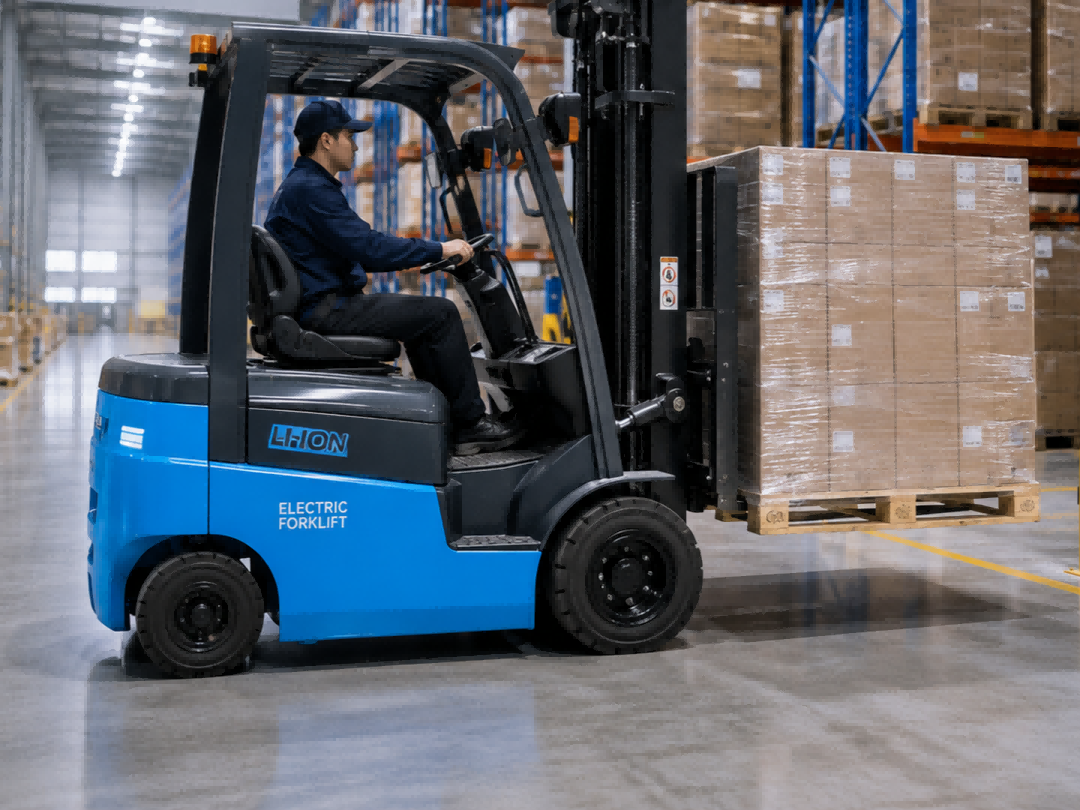
This is why any calculator that only compares purchase prices is worse than useless. It actively misleads the decision. Comparing the lithium vs lead acid forklift battery total cost requires a structured framework that accounts for every operational dollar over a defined time horizon, and that's exactly what the framework below is built to deliver.
The 7 Cost Buckets in a Complete Forklift Battery TCO Model
Most ROI conversations in this space treat "cost" as a single line item. In practice, there are seven distinct cost buckets, and omitting any of them will distort your forklift battery cost comparison calculator output significantly. Here's what each bucket contains and why it matters.
Acquisition cost.
Not just the battery itself, but per-truck quantity. Lead-acid multi-shift operations typically require 2–3 batteries per forklift (one operating, one charging, one cooling). Lithium runs a 1:1 ratio: one truck, one battery, one charger. If you're quoting "per battery" but your fleet needs double the count, your spreadsheet is lying to you.
Charger cost.
An item almost everyone forgets. Lead-acid chargers cannot safely charge lithium cells; the equalization stage in a lead-acid charge profile will damage a lithium pack and void its warranty. Dedicated lithium chargers run $500–$800 per unit based on current market pricing for industrial lithium-compatible models. For a 20-truck fleet, that's $10,000–$16,000 in charger CapEx that never shows up in simple calculators.
Energy consumption.
Lithium-ion batteries are 10–15% more efficient in charge-discharge cycles than flooded lead-acid. On a single truck, the annual electricity savings are modest, roughly $50–$225 per battery. For most fleets, energy savings alone won't justify the switch, but across 30+ trucks over a decade, they meaningfully shorten a payback timeline that's already being driven by eliminated swaps and maintenance.
Maintenance labor.
Lead-acid batteries require weekly watering, periodic equalization charges (3–4 hours each), terminal corrosion cleaning, and acid spill management. Lithium packs require essentially zero routine maintenance. The labor delta isn't dramatic for a two-truck shop, but in a 50-truck distribution center, the eliminated maintenance hours translate directly into redeployable headcount.
Downtime and productivity loss.
In multi-shift operations, battery swap downtime typically costs more per year than the batteries themselves, making this the single largest hidden variable in any electric forklift battery TCO analysis. Every swap is a forklift that isn't moving pallets, and in high-throughput facilities, this bucket can dwarf the acquisition cost. The lithium advantage here is opportunity charging, topping off during breaks and shift changes without degradation. In our deployment experience, facilities that don't run structured operator training in the first 30 days typically capture less than 60% of projected opportunity charging gains during months 1–3. The full savings emerge only after operators internalize the new charging rhythm.
Facility space.
Eliminating battery swap infrastructure can recover 500+ square feet of prime warehouse floor per fleet, space that was generating zero revenue as a battery room. In one documented fleet conversion, a facility recovered 1,200 square feet when moving from 30 lead-acid batteries to 15 lithium units across a 15-truck fleet. Whether this bucket has dollar value depends on your cost per square foot, but in high-rent distribution markets, it's material.
Residual value and exit cost.
This is the bucket nobody talks about. Lead-acid batteries have established scrap and recycling value. Lithium packs hold residual value differently. The picture changes dramatically depending on whether you're running a retrofit or an OEM-integrated system. In fleet resale transactions we've supported, retrofitted lithium forklifts typically retain roughly 30% of their value after three years, compared to approximately 60% for purpose-built lithium units. If you're planning to resell or trade in forklifts within 5 years, add the residual value gap to any retrofit-vs-OEM comparison. On a 10-truck fleet, it can represent a five-figure swing that turns a winning business case into a losing one.
Forklift Battery ROI Calculator: Step-by-Step TCO Framework
Here is a framework you can fill in with your own fleet data. The rows correspond to the seven cost buckets above. Populate both columns using your actual operating numbers or the reference ranges provided, then calculate the 5-year TCO difference to determine your payback timeline.
| Cost Category | Lead-Acid (5-Year Total) | Lithium-Ion (5-Year Total) | Your Notes |
|---|---|---|---|
| Battery acquisition (per truck × fleet size × replacements in 5 yr) | $3,500–$8,000/unit; multi-shift needs 2–3 per truck; replace every 3–5 years | $10,000–$25,000/unit; 1 per truck; typically no replacement within 5 years | Count total units needed |
| Charger cost | Existing chargers often compatible | $500–$800 per new lithium charger × fleet size | Often missed |
| Energy cost (annual × 5) | Higher kWh draw due to lower charge efficiency | 10–15% lower kWh consumption | Pull from utility bills |
| Maintenance labor (annual × 5) | Watering + equalization + cleaning + acid management | Near zero | Use loaded labor rate |
| Downtime / productivity loss (annual × 5) | 15–30 min per swap × swaps per day × operating days | Eliminated if opportunity charging is adopted | Hardest to quantify; use conservative estimate |
| Facility space cost (annual × 5) | Battery room rent/opportunity cost | Recovered space value | Use your $/sq ft |
| Residual value at year 5 | Scrap/recycling value of lead-acid | Remaining battery life value (typically 50%+ of useful cycles remain) | Offset against acquisition |
The formulas:
This formula gives you a clean number, but its accuracy depends entirely on what you put into each bucket. The reference ranges above are industry averages; your actual numbers will differ by 20–40% depending on local electricity rates, labor costs, and shift intensity. Use your own utility bills, your own labor rates, your own downtime logs.
If you'd like a pre-filled version of this forklift battery payback period calculator framework based on your fleet size, request a custom TCO model from our engineering team.
3 Real-World ROI Scenarios: From 17 Months to "Never"
The claim that lithium always pays for itself in 2–3 years is one of the most repeated, and most misleading, statements in this industry. The payback timeline for a lithium forklift battery investment varies so dramatically by operational profile that quoting a single number is irresponsible. Here's what the data actually shows across three distinct fleet scenarios.
Scenario 1: Cold storage, high intensity, 17-month payback.
A frozen food distribution center running 12 reach trucks in a –20°F environment achieved ROI in 17 months, according to industry fleet conversion data. The accelerated return was driven by a factor most standard calculators ignore entirely: lead-acid batteries lose 30–50% of their rated capacity in sub-freezing temperatures, requiring more frequent swaps and creating a cascading productivity penalty. Eliminating the heated battery room alone produced significant annual savings. If your operation includes cold chain or freezer environments, your multi-shift forklift battery savings calculator should weight this bucket heavily.

Scenario 2: Standard multi-shift warehouse, 24–36 months.
In one documented fleet conversion, a 50-truck 3PL operation achieved break-even at 31 months, saving 56% of previous power system costs over an eight-year analysis period. A separate 10-truck distribution center running two shifts per day achieved break-even around month 14, with a $20,000 Day 1 CapEx premium offset by $123,900 in cumulative OpEx savings over five years. Operations running two or more shifts per day and cycling batteries at least twice daily will reliably fall in the 24–36 month payback band. Any forklift battery ROI calculator built for fleet-level decisions should model your specific shift pattern against these benchmarks rather than applying a generic timeline.
In our own deployment work, we've seen this pattern confirmed across geographies. A fleet operator in Saudi Arabia replaced the previous 300Ah lithium packs on Toyota BT reach trucks with Polinovel 48V 315Ah LiFePO4 batteries. The integrated counterweight engineering and CAN bus compatibility eliminated the hidden conversion costs that typically erode ROI projections in retrofit scenarios. That project tracked within the 24-month payback window for a two-shift warehouse operation, confirming that a forklift lithium battery break even calculator must account for integration quality, not just cell price.
But here's where the honest analysis diverges from vendor marketing.
Scenario 3: Single-shift, low utilization, payback may never arrive.
"If your fleet runs one shift per day with extended idle periods between uses, the operational savings that drive lithium ROI... simply don't accumulate fast enough to overcome the 2–3× acquisition premium."
Industry practitioners who have modeled this extensively are candid: single-shift applications might never reach payback within a reasonable financial horizon. This doesn't mean lithium is a bad technology. It means it's the wrong investment for that operational profile. Any warehouse forklift battery replacement ROI analysis that doesn't test for this scenario is incomplete.
The practical takeaway: run your numbers through the framework above for your shift pattern before accepting anyone's generic payback claim, including ours. For a full feature comparison beyond the economics, see our lead-acid vs lithium forklift battery breakdown.
5 Hidden Costs That Quietly Destroy Your ROI Model
The charger swap nobody budgeted for.
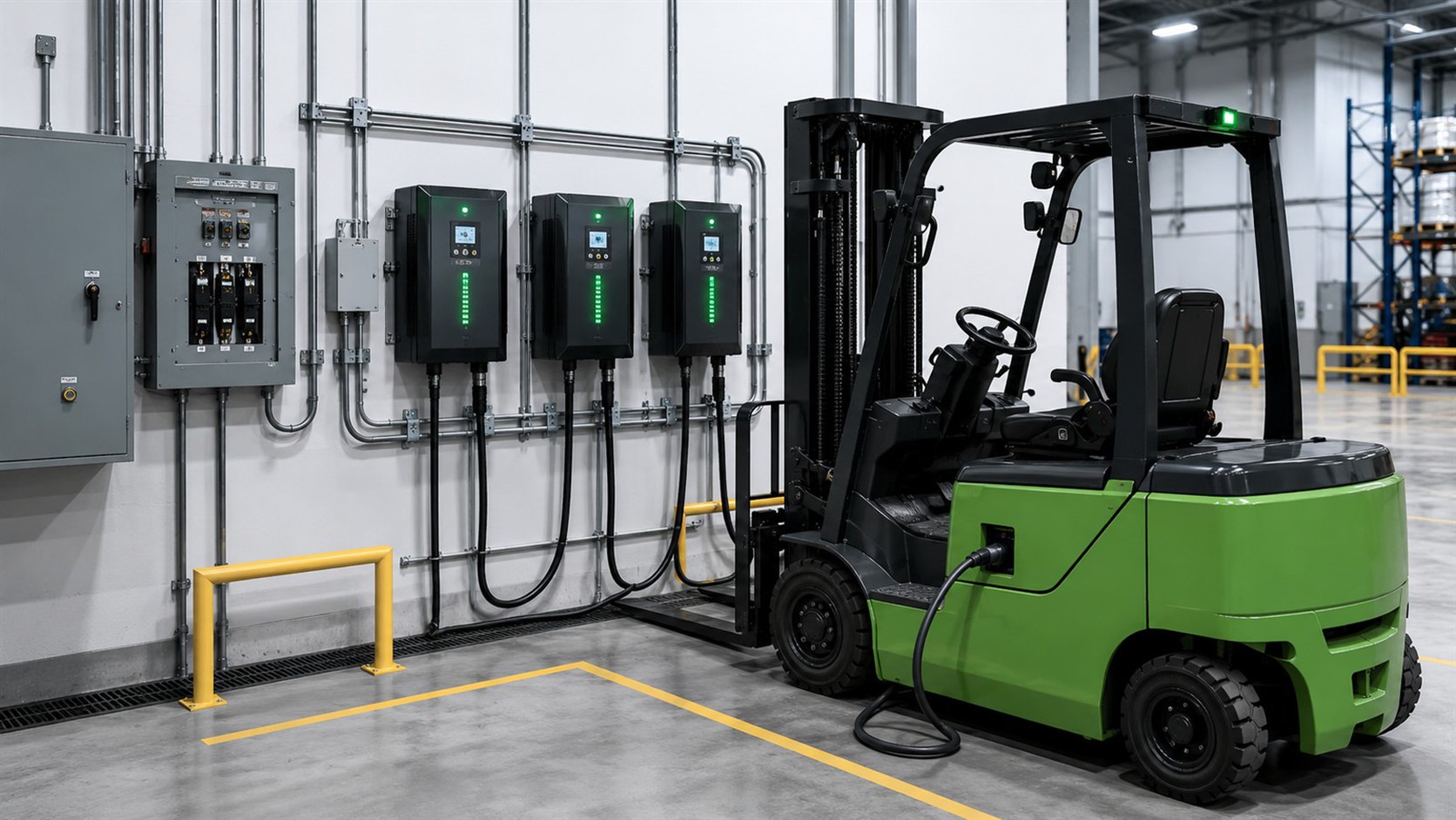
We covered this in the cost buckets, but it bears repeating because of how often it's overlooked. Lead-acid chargers use a bulk-absorption-equalization profile that will damage lithium cells. If your fleet has 15 trucks and you need 15 new lithium-compatible chargers at $500–$800 each, that's $7,500–$12,000 in CapEx that wasn't on the original purchase order.
Controller compatibility failures.
Older forklifts with legacy motor controllers (like the GE EV100 platform) were designed around the lead-acid discharge curve. A lithium battery's flatter voltage profile can trigger error codes. Code 15 and Code 16 are common because the controller interprets the voltage data incorrectly (Forkliftaction.com). The fix may require resistor modifications to the control circuitry or a full controller software update. Neither is free, and neither appears in any standard electric forklift battery TCO analysis template.
Counterweight engineering.
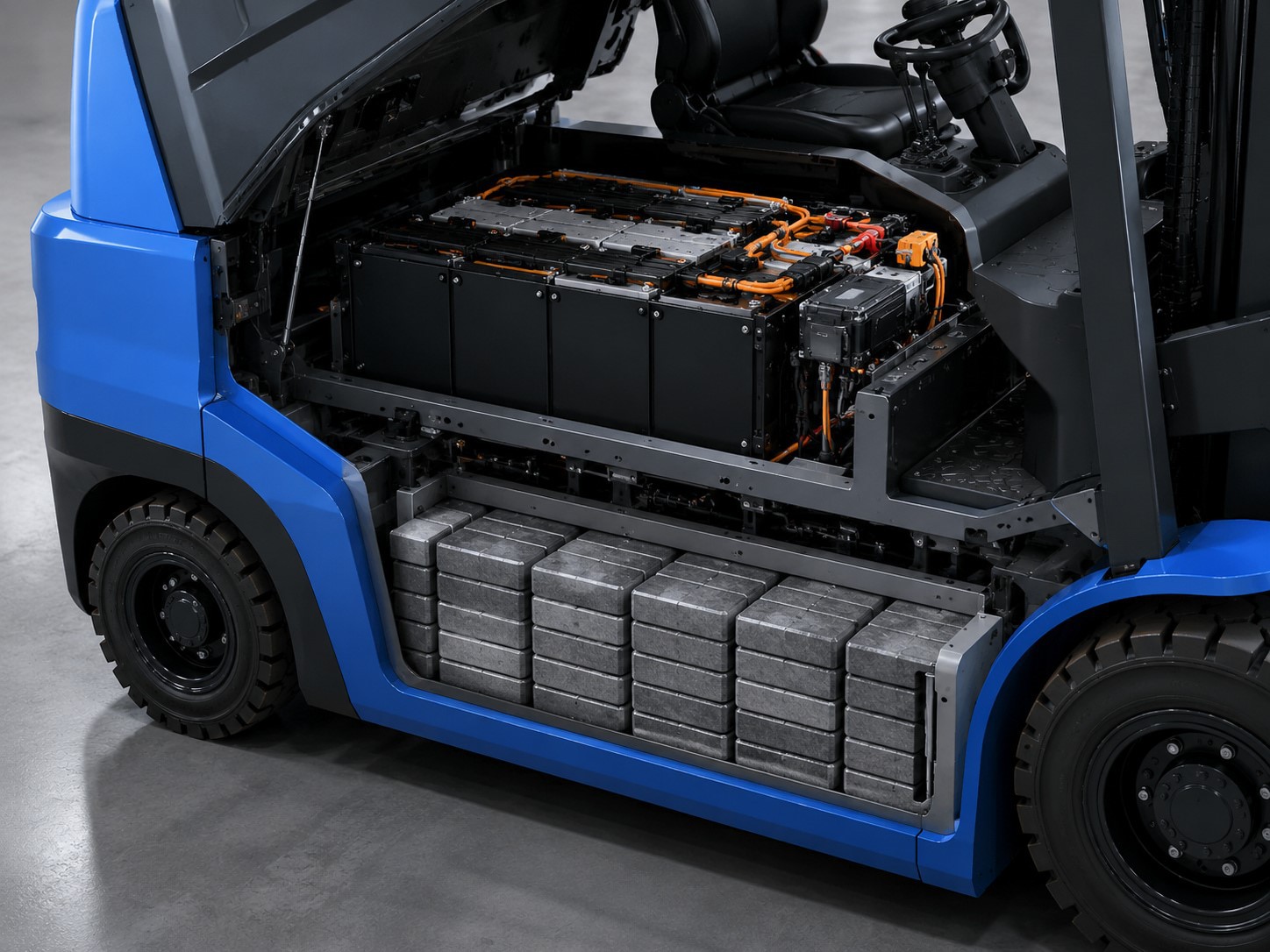
Lithium packs weigh 50–70% less than the lead-acid batteries they replace. In a counterbalance forklift, the battery is the counterweight; it's what keeps the truck from tipping forward under load. If a supplier quotes you a lithium forklift battery without specifying ballast engineering to match OEM weight specs, don't sign the PO. You're being sold an incomplete solution that creates a genuine OSHA compliance risk.
Reputable manufacturers build steel ballast into the battery casing to match OEM weight specs, and this engineering cost should appear as a line item in your conversion budget. If it doesn't, ask why. We've detailed the technical integration requirements for lithium forklift batteries separately, including BMS compatibility and charging protocols for operations running mixed fleets or legacy truck models.
The operator retraining transition dip.
Lithium's biggest operational advantage, opportunity charging during breaks, requires operators to change a deeply ingrained habit. With lead-acid, the routine is simple: plug it in at end of shift, swap in the morning. Lithium needs frequent short charges throughout the day. In the first 3–6 months after conversion, many facilities report that operators revert to old habits, leaving trucks uncharged during breaks and undermining the utilization gains that the ROI model assumed. Budget for structured retraining in your first 90 days, or expect months 1–6 to underperform your projections.
Residual value asymmetry.
A converted forklift (lead-acid frame retrofitted with lithium battery) retains roughly 30% of its value after three years, while a factory-built lithium forklift retains approximately 60%. Over a 10-year fleet lifecycle, this gap compounds into a significant financial variable. On a 10-truck fleet, the residual value differential alone can exceed $60,000–$80,000. If your forklift battery ROI calculator doesn't include a residual value line, it's missing one of the largest long-term variables in the model.
How to Get Your CFO to Approve the Investment
Calculating your fleet's forklift battery ROI is the technical work. Presenting it in a way that moves through a capital expenditure approval process is a different skill. Here's what actually lands with finance teams, based on how this conversation unfolds in B2B procurement.
Lead with payback period, not savings percentage.
A CFO hearing "24-month payback" processes the information faster than "42% TCO reduction over five years." Both numbers come from the same model, but the first one answers the question finance is actually asking: how long until this stops being a cost and starts being a return?
Include regulatory tailwinds as risk mitigation.
California's Advanced Clean Fleets rule now requires high-priority fleets to exclusively purchase zero-emission forklifts, and similar regulations are anticipated in other states (Mordor Intelligence). Framing the lithium transition as compliance future-proofing rather than purely elective CapEx changes the conversation.
For U.S.-based operations, quantify the IRA incentive.
The Inflation Reduction Act's 30% investment tax credit for commercial clean energy equipment can compress a 36-month payback to roughly 25 months. This single line item often makes the difference between a project that clears the hurdle rate and one that doesn't.
Frame the status quo as the risky position.
Lead-acid's current 70% market share masks a supply chain that's tightening. Major OEMs are phasing out lead-acid-only charger product lines, and parts availability for dedicated battery rooms will become a cost variable within 3–5 years as fleet electrification ROI drives the industry toward lithium infrastructure.
FAQ: Forklift Battery ROI Calculator
Q: How do you calculate ROI on a forklift battery?
A: Compare total cost of ownership across seven categories: purchase price, charger cost, energy consumption, maintenance labor, downtime losses, battery room space, and residual value, over a 5–10 year period. Subtract the lower-TCO option from the higher, then divide savings by the upfront investment difference. The framework table earlier in this article walks through each input.
Q: How long does it take for lithium forklift batteries to pay for themselves?
A: Multi-shift operations typically see payback in 24–36 months. Cold storage facilities can achieve break-even in as little as 17 months. Single-shift, low-utilization operations may not reach payback within a reasonable financial horizon, making a proper TCO analysis non-negotiable before committing capital.
Q: What hidden costs do most forklift battery ROI calculators miss?
A: Five items are most commonly omitted: lithium-compatible charger replacement, forklift controller adaptation for older trucks, counterweight engineering to maintain OSHA-compliant stability, operator retraining costs during the transition period, and the difference in asset residual value between retrofitted and OEM-built lithium forklifts.
Q: Is switching to lithium forklift batteries always worth it?
A: No. Lithium delivers strong ROI in high-utilization, multi-shift environments where battery swap elimination and opportunity charging generate daily savings. For single-shift operations with long idle periods, the economics often don't support the premium. A proper TCO analysis for your specific operational profile is the only reliable way to answer this question.
Q: What is the total cost of ownership difference between lead-acid and lithium?
A: In multi-shift warehouses, lithium batteries typically reduce total operating costs by 30–50% over a five-year period despite costing 2–3× more at purchase. The savings come from eliminated maintenance labor, reduced energy consumption, no battery swapping infrastructure, and a lifespan that commonly extends to 8–10 years versus 3–5 for lead-acid.
Next Step: Get a Custom TCO Analysis for Your Fleet
The framework in this article gives you the structure to run your own numbers. For operations where the variables are complex, including mixed fleet types, cold storage and ambient zones in the same facility, or phased conversion timelines, a custom analysis built on actual deployment data produces materially better projections than a generic model.
Polinovel's application engineering team has supported lithium battery integration across forklift fleets ranging from 5-unit single-warehouse setups to 200+ truck multi-site operations in over 80 countries. Our LiFePO4 battery solutions come with matched BMS configurations, OEM-standard counterweight engineering, and CE/IEC/UN38.3 certifications. That technical foundation is what makes the financial model hold up in practice.
If your next step is finding the right forklift battery supplier or getting a custom TCO projection for your fleet, start with our material handling battery solutions and request a consultation. The ROI conversation works best when both sides are working from real numbers.


