


Forklift batteries for sale are easy to find. The harder part is knowing which battery is actually right for your forklift, your charger, and your daily operation.
A low price may look good at first. But if the battery does not fit the forklift, it can bring problems later. Wrong voltage, size, weight, connectors, or charger matching may cause poor runtime, charging trouble, installation delays, and extra downtime.
This is especially important when replacing an old lead-acid battery, upgrading to a lithium forklift battery, or buying batteries for a fleet.
In this guide, we look at the key factors to consider before buying a forklift battery. We compare lead-acid and lithium options, explain what affects battery cost, and discuss why supplier experience matters.
Know Your Forklift Battery Buying Needs
When looking at forklift batteries for sale, the first question is not always "Which battery is the cheapest?" A better question is: "What buying problem do I need to solve?"
Replacing an Old Forklift Battery
If you need a forklift battery replacement, the goal is simple: get the truck running again without fitment or charging problems. In this case, the supplier should match the original battery specifications and confirm the charger setup before production.
Upgrading From Lead-Acid to Lithium
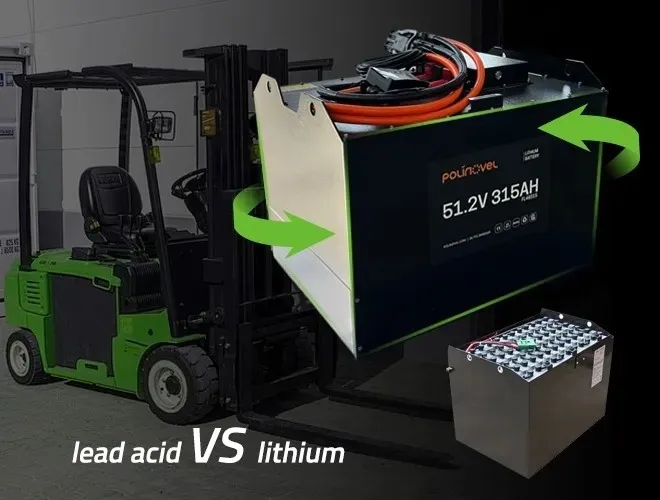
If you are replacing a lead-acid forklift battery with lithium, the goal is often to reduce charging time, watering, battery swapping, and daily maintenance. But the new lithium forklift battery still needs to match the compartment, charger, connector, and forklift balance.
Buying Batteries for a Forklift Fleet
If you are buying batteries for a fleet, the focus should be on long-term uptime, not only unit price. Shift schedules, charging windows, and site conditions can all change the best battery choice.
Lead-Acid or Lithium: Which Forklift Battery Should You Buy?
After clarifying your buying needs, the next step is choosing the right battery type.
For most forklift buyers, the decision often comes down to lead-acid battery vs lithium-ion for forklifts. There is no single best choice. It depends on how often the forklift operates, how much downtime your operation can accept, and how much maintenance your team is willing to manage.

When Lead-Acid May Still Be the Right Choice
Lead-acid batteries are still widely used in electric forklifts. They may be suitable for light-duty operations where forklifts work only a few hours per day and have enough time for charging.
For a fleet that runs one shift, three to five days a week, lead-acid can still work well. This is especially true if the site already has a battery room and trained staff for charging and maintenance. The key is matching the battery technology to the actual operating intensity-not assuming one type fits all.
They also have a lower upfront cost. For companies with limited initial budgets, this can be attractive.
However, lead-acid batteries usually need more charging time and daily attention. Conventional lead-acid forklift battery charging often follows the 8-8-8 rule:
- 8 hours of operation
- 8 hours of charging
- 8 hours of cooling
This means one battery may need close to a full 24-hour cycle before it is ready for the next full use. For single-shift operations, this may be manageable. For busy fleets, it can create downtime, battery swapping, and extra charging space requirements.
Lead-acid batteries may also require watering, equalization charging, and careful charging area management. OSHA notes that electric forklifts powered by large lead-acid batteries must be routinely charged, and battery charging or changing brings safety practices that need to be managed properly.
When Lithium Makes More Sense
Lithium forklift batteries usually make more sense when uptime becomes important.
This is common in:
- Multi-shift warehouses
- Logistics centers
- Distribution centers
- Manufacturing plants
- Cold storage facilities
- High-frequency material handling operations
Lithium batteries can support faster charging and opportunity charging when paired with a compatible charger and BMS. However, successful opportunity charging depends on more than the battery alone. Opportunity charging needs the battery, BMS, and charger to work together. The battery should support frequent partial charging. The BMS should manage repeated top-up cycles. The charger should also use a compatible communication protocol, such as CAN bus. Without this match, opportunity charging may not bring the expected uptime improvement.
They do not require watering and usually need much less routine maintenance than lead-acid batteries.
For example, Toyota Europe states that one of its 25V lithium-ion forklift battery solutions can reach 50% charge in 30 minutes and full charge in about 80 minutes. This shows why lithium batteries are often considered for fast charging and opportunity charging applications.
However, charging speed is not the same for every lithium forklift battery. Actual charging time depends on battery capacity, charger power, battery temperature, SOC range, BMS settings, and overall system design.
Still, for high-use operations, lithium can help reduce long charging breaks, battery swapping, and maintenance work. In some multi-shift operations, one lithium battery may reduce the need for multiple lead-acid batteries when paired with a suitable charging strategy and charger.
Quick Comparison: Lead-Acid vs. Lithium Forklift Batteries
| Factor | Lead-Acid Battery | Lithium Forklift Battery |
| Best fit | Light-duty or budget-sensitive single-shift use | High-use, multi-shift, or uptime-focused operation |
| Upfront cost | Usually lower | Usually higher |
| Charging pattern | Often needs long chargingand cooling time | Supports faster charging and opportunity charging |
| Maintenance | May require watering,equalization, and regular | Lower routine maintenance checks |
| Battery swapping | Often required in multi-shift fleets |
Often reduced with the right chargerand charging schedule |
| Power output | Voltage may drop morenoticeably during discharge | More stable voltage output acrossmuch of the discharge cycle |
| Long-term value |
Better for low-useapplications with enough charging time | Better for operations focused onuptime, lower maintenance, and reduced downtime |
Match the Battery to Your Forklift First
Choosing the battery type is only the first step. The battery also needs to match the forklift itself. A lower price means little if the battery cannot fit, charge, or work reliably.
Voltage and Capacity
Common forklift battery voltages include 24V, 36V, 48V, and 80V. Some high-capacity or special industrial applications may use other voltage platforms.
Capacity affects runtime. But a larger capacity is not always the only answer.
The right capacity should match:
- Daily working hours
- Load weight
- Lifting frequency
- Travel distance
- Number of shifts
- Charging windows
For busy warehouses, fast charging and opportunity charging also matter. If the forklift can charge during breaks, the fleet may not always need an oversized battery.
Size, Weight, and Installation Fit
The battery must fit the compartment. Check length, width, height, cable outlet direction, connector position, and mounting structure.
Weight also matters.
In many electric forklifts, the battery is part of the counterweight system. If a lithium battery is much lighter than the original lead-acid battery, it may affect:
- Forklift balance
- Rear-wheel traction
- Lifting stability
- Load handling safety
That is why size and weight should be checked together. Some lithium forklift battery projects may need added counterweight or customized battery weight.
Charger, Connector, and Communication
A suitable battery also needs the right charging and connection setup.
Before buying, check:
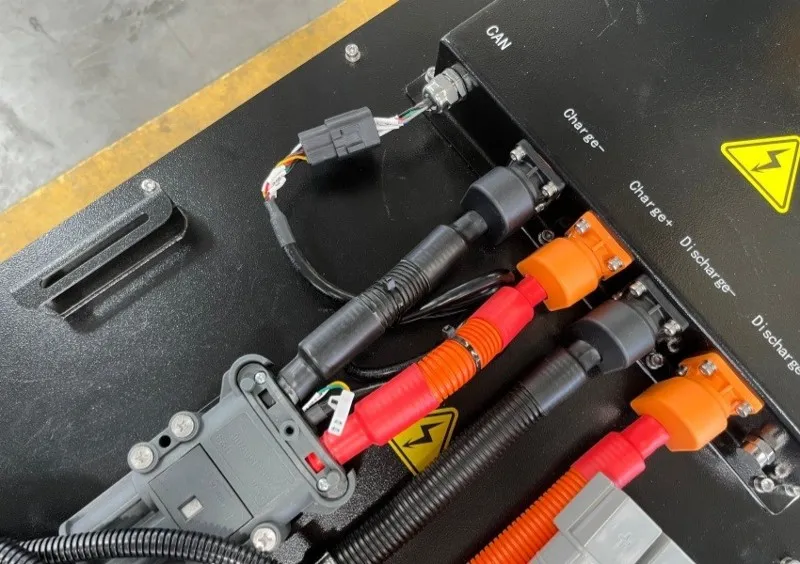
- Connector type (e.g., Anderson or REMA type) – must match the forklift's existing harness )
- Cable length and routing – ensure it reaches without modification
- Charger voltage and current
- Charging curve
- Communication requirement
When upgrading from lead-acid to lithium, the old charger may not be suitable. A matched lithium charger is often needed.

Communication is another detail to consider.
Some lithium forklift battery systems support CANbus, RS485, or RS232 communication. This allows the battery BMS and charger to exchange data such as state of charge (SOC), voltage, current, temperature, alarms, and charging status. For fleet users, this can help improve charging coordination, battery visibility, and daily operation safety.
Working Environment
The working environment can change the battery design.
A warehouse forklift, cold storage forklift, and heavy-duty forklift may not need the same battery configuration.
For cold storage, the battery may need:
- Self-heating
- Low-temperature protection
- Temperature monitoring
- Thermal insulation
- IP-rated housing
Heavy-duty operation places more stress on the battery. Buyers may need stronger housing, stable high-power output, shock and vibration resistance, dust and moisture protection, and better impact resistance.
So before buying, match the battery to both the forklift and the job it needs to do.
How Much Does a Forklift Battery Cost
After choosing between lead-acid and lithium, the next question is usually cost.
Some industry sources use price examples for reference. A common 48V lead-acid forklift battery may cost about $2,000–$6,000. A lithium battery with similar voltage and usable capacity may range from $15,000–$22,000. These are only reference ranges. The final price can change with capacity, customization, BMS functions, and supplier terms.
Two batteries may have the same voltage, but the price can still be different. Capacity, size, weight, protection design, charger requirements, and working conditions can all affect the final cost.
Cost factors related to the battery itself
Battery type
Lead-acid batteries usually have a lower upfront cost. Lithium forklift batteries often cost more at the beginning, but they may reduce charging downtime, watering, battery swapping, and daily maintenance.
Voltage and capacity
Higher voltage or larger capacity can increase the cost. But a larger battery is not always the better choice. The required capacity should be determined by actual energy demand, equipment workload, and operating requirements.
Customization & Design Requirements
Custom fitment can also affect the final price. Modifying battery dimensions or adding external counterweights to replicate the exact weight of your original lead-acid unit involves extra manufacturing costs. These changes help maintain forklift stability, but they also increase the final quote.
BMS and communication functions
A smart Battery Management System (BMS), SOC display, CAN communication, Bluetooth, and temperature monitoring can add cost. But these functions also help improve battery visibility, charging coordination, and protection.
Cost factors related to your operation
Charger matching
A lithium forklift battery may need a matched lithium charger. The charger may be included in the quotation or quoted separately, depending on the project.
Working environment
Cold storage, outdoor loading areas, and heavy-duty industrial sites may need extra design. Self-heating, IP-rated housing, stronger case design, and vibration protection can all affect the final cost.
Order quantity
A single replacement battery and a fleet battery project may have different pricing. Larger orders may also require more technical matching, delivery planning, and after-sales support.
A lower price does not always mean better value. If the battery does not fit the forklift's size, weight, charger, or working environment, it may bring problems later. These problems can include installation issues, charging trouble, and extra downtime.
Why Supplier Experience Matters When Buying Forklift Batteries
By this point, you may already know the voltage, capacity, battery type, and approximate budget you need.
However, buying the right forklift battery is not only about choosing a product. It is also about making sure the battery can be matched, installed, and supported throughout its service life.
This is where supplier experience becomes important.
Confirm the Right Battery Configuration
Many forklift battery projects start with limited information. In some cases, buyers only know the forklift model. In others, the original battery label may be missing or incomplete.
For lead-acid replacement and lithium upgrade projects, an experienced supplier can help cross-check key details before production, including:
- Forklift model and original battery data
- Battery compartment fit and weight requirements
- Charger setup and connector layout
- Communication needs, such as CANbus, RS485, or RS232
This helps reduce the risk of installation problems, charging issues, or performance limitations after delivery.
This is especially important for different types of material handling equipment. Electric forklifts, reach trucks, pallet jacks, walkie stackers, order pickers, tow tractors, and AGVs may all need different battery configurations.
Related Reading: Powering Material Handling Equipment for Uninterrupted Operations
Adapt the Battery to the Application
A battery that works well in one operation may not be the best choice for another.
For example, cold storage forklifts may need self-heating and low-temperature protection. Heavy-duty forklifts may need a stronger case, stable power output, or extra battery weight. For multi-shift fleets, fast charging and opportunity charging may matter more.
Rather than selecting a battery from a standard specification sheet, suppliers should understand how the equipment is actually used and recommend a suitable configuration.
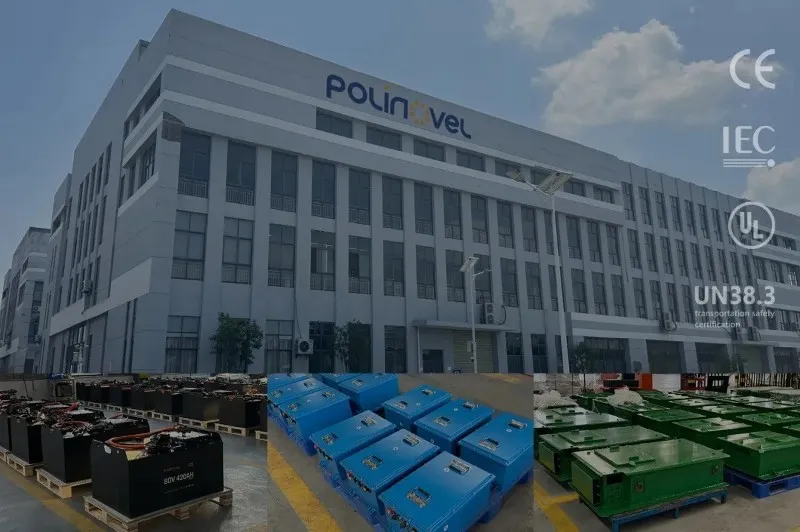
Polinovel supports lead-acid replacement, lithium upgrades, and custom forklift battery projects. Each project can be matched by voltage, capacity, dimensions, weight, connector type, housing design, and cable layout.
Verify Performance Before Delivery
Even when the configuration looks correct on paper, the battery should still be checked before shipment.
Factory verification helps confirm that the battery pack, BMS, display, protection functions, and charger communication are working as expected. For lithium forklift battery projects, this step is important because many problems are easier to solve before delivery than after the battery arrives on site.
Typical checks may include:
- Charging and discharging tests
- BMS protection function checks
- SOC, voltage, current, and temperature display checks
- CAN, RS485, or RS232 communication verification
- Connector and cable inspection
- Housing, labeling, and safety inspection
- Pre-delivery functional testing
These checks help reduce installation risk and give buyers more confidence before the battery enters daily operation.
After-Sales Support: Warranty and Technical Assistance
A well-built battery still needs reliable support during its service life. Before committing to a supplier, clarify:
- Warranty period and coverage (e.g., what is included: BMS, cells, labor?)
- Technical response time for troubleshooting
- Availability of replacement parts or loaner units
Suppliers who are confident in their products will offer transparent, practical after-sales terms. This is often the difference between a one-time transaction and a long-term partnership.
| Buyer Need | Polinovel Support |
| Replace an old forklift battery | Match voltage, capacity, dimensions, weight, connector, and charger requirements |
| Upgrade from lead-acid to lithium | Customized lithium forklift battery solution with fitment and balance support |
| Cold storage application | Self-heating, low-temperature protection, temperature monitoring, and insulation options |
| Multi-shift operation | Fast charging and opportunity charging support with matched charger configuration |
| Fleet battery project | Technical matching, configuration support, and quotation based on real operating conditions |
| Heavy-duty application | Reinforced housing, vibration-resistant design, andcustomized protection options |
Finding forklift batteries for sale is not difficult. The real challenge is choosing a battery that fits your forklift, charger, working environment, and daily operation.
Before buying, confirm your battery type, voltage, capacity, size, weight, charger compatibility, and application requirements. Lead-acid may still work for light-duty use, while lithium forklift batteries are often a better fit for multi-shift, high-use, or maintenance-sensitive operations.
Need help choosing the right forklift battery? Contact Polinovel with your forklift model, original battery specifications, charger information, and working conditions. Our team can help recommend a suitable lithium forklift battery solution for your project.


