


Most fleet managers start with the wrong question. "Which option costs less?" sounds practical, but it misses the point entirely. The real question is whether your power strategy matches your operational reality. Misalignment between the two costs more than the wrong battery chemistry ever will.
A case study published on Toyota Forklifts' resource library documented what this looks like in practice: a two-shift operation using 18-85-23 lead-acid batteries was running 1.84 EBU (Equivalent Battery Usage) daily, meaning they depleted nearly two complete battery cycles every 24 hours. Peak usage hit 1426 AH against a usable capacity of just 748 AH. Their batteries were failing in three years instead of five, specifically because usage exceeded what that chemistry could sustain.
(toyotaforklift.com/resource-library/blog/energy-solutions/a-case-study-with-toyota-lithium-ion-batteries)
That facility didn't have a "bad battery" problem. They had a decision framework problem.


Why Utilization Intensity Is the Variable That Actually Matters
Annual operating hours per forklift predicts rental-vs-purchase outcomes more reliably than any other factor. Below 2,000 hours, rental almost always wins. Above 4,000 hours, purchasing wins. The 2,000-4,000 range is where most procurement teams make expensive mistakes, and where this framework earns its value.
When we spec Polinovel lithium forklift batteries for multi-shift operations, the utilization threshold is the first filter. A 48V 440Ah LiFePO4 pack rated for 4,000+ cycles will outlast the truck itself in a high-hour environment. That same battery sitting in a seasonal warehouse running 1,200 hours annually becomes dead capital for years.
Rental agreements typically cap usage at 1,500 hours per year. Overage fees documented in standard lease terms run $10-30 per hour. A facility expecting to add a second shift within 24 months should model those potential overages before signing anything.
Three Conditions That Make Rental the Right Choice
Rental programs become financially superior when three conditions align: utilization below 2,000 hours, no internal battery maintenance capability, and technology in rapid flux. Missing any one of these weakens the case.
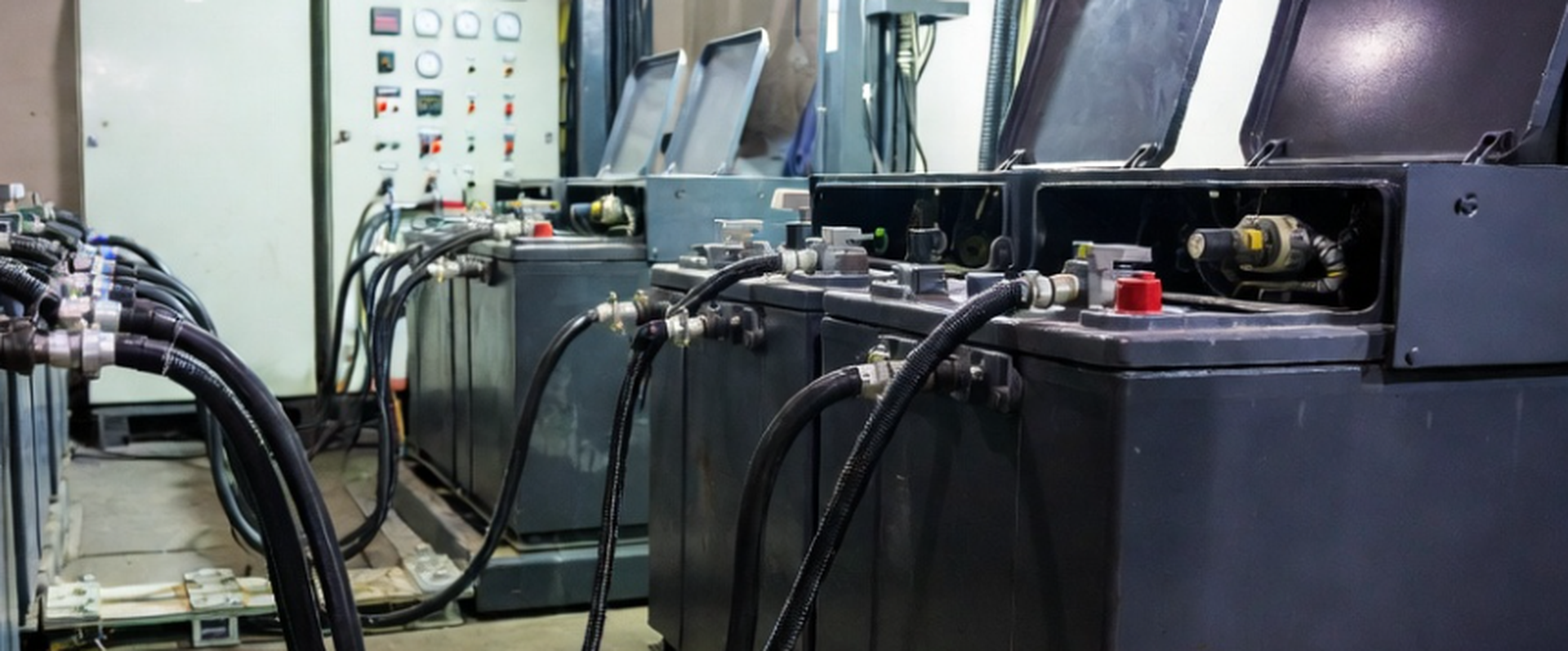
What separates good rental programs from marginal ones is scope of coverage. Programs like EnerSys POWER RENT bundle maintenance services, eliminating watering, equalization, and cleaning tasks. For a 20-truck fleet, this represents roughly 6 hours of weekly labor that disappears from operational overhead.
BaaS, Battery as a Service, is a third path that combines elements of both. You purchase the forklift but rent the battery, reducing initial capital outlay by 25-40% while maintaining equipment ownership. Polinovel offers this structure for operations transitioning from lead-acid to LiFePO4, specifically because it eliminates the technology obsolescence risk that makes CFOs hesitate on large battery investments.
When Purchasing Delivers the Fastest ROI
Raymond Corporation research confirms that converting a warehouse lift truck fleet from traditional lead-acid to lithium-ion results in productivity improvements up to 17% while providing break-even in 10 to 16 months with lifetime ROI of 415% to 656%. (raymondcorp.com/products/energy-solutions)
Those numbers assume your facility can actually capture the efficiency gains. Most can't without changing operational procedures.

Cold storage is where the gap becomes undeniable. Polinovel packs are rated for -20°C to 60°C continuous operation, which is why cold chain facilities see accelerated payback timelines. Multi-shift warehouses benefit from opportunity charging during breaks rather than battery swapping, eliminating the dedicated battery room entirely. That recovered floor space has value that doesn't appear in typical ROI calculations.
A point that rarely surfaces in vendor literature: purchasing makes sense only when you have internal capability to manage the asset. If your maintenance team handles battery watering and equalization competently today, you'll capture the full ownership benefit. If those tasks fall through the cracks, the theoretical savings never materialize. LiFePO4 chemistry changes this equation. Zero watering, zero equalization, maintenance reduced to visual inspection and terminal cleaning. Polinovel's 5-year warranty and 4,000+ cycle rating reflect that operational simplicity.
What the Decision Actually Comes Down To
Two questions determine the outcome for most operations:
How many hours per year will each forklift run? If you don't have this data, conduct a power study before spending anything. EBU, calculated as daily amp-hours consumed divided by usable battery capacity, is the metric that matters. Most facilities discover their assumed utilization differs from reality by 15-30%.
What happens if your volume doubles in 18 months? Rental agreements with hour caps become liabilities during growth phases. A 48V or 80V Polinovel pack designed for Toyota, Raymond, or Crown equipment scales with your operation rather than against it.
The hybrid approach, own batteries for baseline demand and rent for surge capacity, consistently delivers lowest TCO for operations with seasonal variation exceeding 40% peak-to-average.
What Happens Next
Your current utilization data is probably wrong by 15-30%. That gap determines whether you overpay for five years or capture the savings that made this decision worth analyzing in the first place.
Polinovel's technical team runs fleet power assessments that start with your actual EBU, your shift structure, and your growth trajectory. The output is a TCO comparison built on your numbers, not industry averages.
Request a Fleet Power Assessment →
FAQ
Q: What's the typical break-even point for lithium forklift battery purchases?
A: Multi-shift operations typically reach break-even within 24-36 months; single-shift operations may require 5+ years. Your actual timeline depends on utilization intensity, which varies by 50%+ across facilities in the same industry.
Q: Can I rent batteries while owning the forklift?
A: Yes. BaaS programs support this structure. Polinovel offers it as a financing option for LiFePO4 conversions.
Q: How long does a power study take, and what does Polinovel provide?
A: A basic EBU assessment requires 5-7 days of data collection. Polinovel's technical team provides the metering equipment, analyzes the results, and delivers a TCO comparison across rental, purchase, and BaaS scenarios for your specific operation.


