


Are all lithium batteries rechargeable?
Not all lithium batteries are rechargeable. There's actually two main categories-lithium primary batteries (single-use) and lithium-ion rechargeable batteries. The confusion here is pretty common because most people today interact mainly with rechargeable lithium-ion batteries in their phones and laptops, but lithium primary batteries are still widely used in devices like smoke detectors, medical equipment and certain industrial applications where you need consistent power output over a long period but don't need to recharge.
Lithium primary batteries are designed for one-time use and trying to recharge them can actually be dangerous. These batteries use lithium metal as an anode and once the chemical reaction is complete, that's it-the battery is done. Meanwhile, lithium-ion batteries (the rechargeable ones) use lithium compounds and can go through hundreds or even thousands of charge cycles depending on the quality and how you use them.
The battery industry has grown substantially, with market research from Bloomberg indicating that the lithium-ion battery market alone was valued at approximately $44.2 billion in 2022, and it's projected to hit $116.7 billion by 2030. That's mostly driven by electric vehicles, consumer electronics and grid storage solutions. Meanwhile, lithium primary batteries still hold about 23% of the specialty battery market according to industry reports.
Power up your knowledge Subscribe to Battery Tech Insights for weekly updates on energy storage solutions and emerging technologies in the battery sector. Get the newsletter
Why it matters for your business
If you're in procurement, product development, or managing equipment that relies on batteries, knowing the difference between rechargeable and non-rechargeable lithium batteries isn't just academic-it has real cost and operational implications.
Cost considerations
While lithium-ion rechargeable batteries have a higher upfront cost (sometimes 3-5x more than primary batteries), they can be recharged 500-2000+ times depending on the chemistry and usage patterns. For high-drain devices that get used daily, the math usually favors rechargeables. But for low-drain devices that sit for months or years between uses, primary batteries often make more sense since they have better shelf life (10-20 years vs 2-3 years for many rechargeable batteries in storage).
Operational efficiency
In a manufacturing or healthcare setting, having the wrong battery type can lead to unexpected downtime. We've seen cases where facilities switched all their emergency equipment to rechargeable batteries thinking they'd save money, only to discover that batteries left uncharged for extended periods degraded faster than primary batteries would have lasted. On the flip side, companies that were replacing primary batteries monthly in high-use devices were burning through budget that could've been saved with a rechargeable solution.
Safety protocols
This is where things get serious. Lithium primary batteries should never be charged-they're not designed for it and can overheat, leak, or in worst cases, catch fire. Make sure your staff knows which batteries are which. We recommend color-coding or clear labeling systems in any facility using both types.
Battery Pro Partners Program Join leading manufacturers in optimizing battery solutions. Learn how our consulting services helped Acme Corp reduce battery costs by 34% while improving equipment uptime. Learn more today
Types of lithium battery chemistries
Not to get too deep in the weeds, but understanding the different chemistries helps explain why some lithium batteries are rechargeable and others aren't.
Lithium primary batteries (non-rechargeable)
These use lithium metal as the anode material. Common types include:
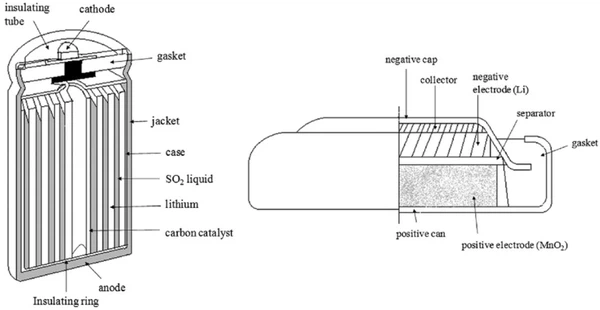
Lithium-thionyl chloride (Li-SOCl2): High energy density, great for long-term applications like utility meters and memory backup. These have a shelf life that can exceed 20 years which is pretty remarkable.
Lithium-manganese dioxide (Li-MnO2): The CR2032 coin cells you see everywhere fall into this category. Lower capacity than Li-SOCl2 but safer and better for consumer applications.
Lithium-iron disulfide: Energizer's Ultimate Lithium batteries use this chemistry. They work better in extreme temperatures than alkaline batteries and last significantly longer.
What makes these non-rechargeable is the chemical reaction is essentially one-way. The lithium metal gets oxidized during discharge and there's no practical way to reverse that process without risking thermal runaway.
Lithium-ion rechargeable batteries
These use lithium compounds (not pure lithium metal) and the lithium ions move between the anode and cathode during charging and discharging. Major types include:
Lithium cobalt oxide (LiCoO2): High energy density, used in smartphones and laptops. These are the ones that occasionally make the news when they overheat, though modern battery management systems have made them much safer.
Lithium iron phosphate (LiFePO4): More stable, longer cycle life (2000+ cycles), used in electric vehicles and power tools. Tesla uses a variant of this in some of their vehicles now. Trade-off is lower energy density than cobalt-based batteries.
Lithium nickel manganese cobalt oxide (NMC): A balanced chemistry used in many EVs. Offers good energy density, decent lifespan, and reasonable cost. This is probably the most common chemistry in electric vehicles right now.
Lithium nickel cobalt aluminum oxide (NCA): High performance, used in Tesla's older models and some high-end applications. Expensive but great energy density.
The rechargeability comes from the fact that lithium ions can move back and forth between electrodes repeatedly. The solid electrolyte interface (SEI) layer that forms on the anode is stable enough to allow this repeated cycling, though it does degrade over time which is why rechargeable batteries eventually lose capacity.
Lithium polymer batteries
Technically these are lithium-ion batteries but they use a polymer electrolyte instead of a liquid one. They're rechargeable and you'll find them in thin devices like tablets and some smartphones. The main advantage is form factor-they can be made very thin and in custom shapes. Downside is they're generally more expensive and can be more prone to swelling if overcharged or damaged.
Common misconceptions
There's a lot of confusion out there and honestly some of it comes from marketing that isn't always clear. Here's what we hear a lot:
"All lithium batteries are the same"-Definitely not true. As we've covered, there's a huge range of chemistries and applications. A lithium coin cell in your car key fob is completely different from the lithium-ion pack in your electric car.
"You should always fully discharge lithium-ion batteries before recharging"-This was true for old nickel-cadmium batteries but it's actually bad for lithium-ion batteries. They prefer partial discharge cycles. Keeping a lithium-ion battery between 20-80% charge actually extends its life.
"Rechargeable batteries are always better for the environment"-Generally yes, but it depends on usage patterns. If you're only using a device twice a year, the energy and resources that went into making a rechargeable battery (plus the electricity to charge it) might not offset the environmental cost compared to a long-lasting primary battery. The lifecycle analysis can be complicated.
Industry applications and trends
Different sectors have different needs when it comes to battery technology and there's no one-size-fits-all solution.
Medical devices
Pacemakers and implantable medical devices almost exclusively use lithium primary batteries. The reason is simple-you can't easily recharge a battery that's implanted in someone's chest, and you need absolute reliability. These batteries can last 5-10 years or more. Some newer devices are exploring inductive charging but it's still not mainstream. Meanwhile, portable medical equipment like infusion pumps and portable oxygen concentrators are moving toward rechargeable lithium-ion batteries for cost savings.
Industrial and IoT sensors
According to a 2023 report from the Industrial Battery Consortium, about 67% of remote sensors still use primary lithium batteries. These are devices in hard-to-reach locations-pipeline monitors, environmental sensors, structural health monitoring systems. The logistics of regularly accessing these devices to change or charge batteries often makes long-life primary batteries the only practical option.

Consumer electronics
This is almost entirely lithium-ion rechargeable territory now. Smartphones, laptops, tablets, wireless headphones, electric toothbrushes-these all use rechargeable lithium-ion batteries. The shift has been dramatic. Back in 2005, most portable electronics used alkaline or NiMH batteries. Now it's rare to find a modern consumer device that doesn't have a built-in rechargeable battery.
Electric vehicles
This is where the really big money and innovation is happening. EV batteries are essentially giant arrays of lithium-ion cells (typically 18650 or newer 2170 format cells in Tesla vehicles, or prismatic cells in many other EVs). A typical EV battery pack might contain 5,000-7,000 individual cells. The battery management system is incredibly sophisticated, monitoring temperature, voltage, and current for every cell or group of cells to maximize performance and safety.
Interesting development here-battery swapping is making a comeback in some markets. Companies like Nio in China are building networks of battery swap stations where you can exchange a depleted battery for a fully charged one in about 5 minutes. This addresses one of the main complaints about EVs (long charging times) but requires significant infrastructure investment.
Aerospace and defense
Mix of both types depending on application. Emergency beacons and certain military equipment use primary batteries for reliability and shelf life. But there's increasing adoption of rechargeable systems where weight and repeated use justify the higher initial cost.
Energy storage systems
Grid-scale battery storage is exploding as renewable energy adoption increases. These are massive lithium-ion battery installations (sometimes using LFP chemistry for safety and longevity) that store excess solar or wind power and release it when needed. California alone has installed over 5,000 MW of battery storage capacity as of 2024. These systems can cycle daily and need to last 10-15 years so the chemistry and battery management is critical.
Safety considerations and regulations
Battery safety has become a major focus, especially after some high-profile incidents with lithium-ion batteries in devices and EVs.
Shipping and transportation
Both primary and rechargeable lithium batteries face strict regulations for shipping. They're classified as dangerous goods by IATA (International Air Transport Association) and DOT (Department of Transportation). If you're shipping products with lithium batteries, you need proper labeling, packaging, and documentation. The rules are slightly different for batteries installed in equipment versus batteries shipped alone. Getting this wrong can result in significant fines and shipping delays.
Storage requirements
Lithium batteries should be stored at moderate temperatures (typically 15-25°C is ideal) and at partial charge (40-60% for lithium-ion). High temperatures accelerate degradation, and storing lithium-ion batteries at full charge for extended periods also reduces their lifespan. For businesses holding inventory, this matters-poor storage conditions can mean your batteries are degraded before you even sell them or put them in service.
Disposal and recycling
This is becoming increasingly important. Lithium-ion batteries contain valuable materials (lithium, cobalt, nickel) that can be recovered. Many jurisdictions now require proper recycling of lithium batteries rather than throwing them in regular trash. Companies like Redwood Materials (founded by Tesla's former CTO) are building large-scale battery recycling facilities. Currently, recycling rates for lithium-ion batteries are only around 5% globally, but that's expected to increase significantly as regulations tighten and recycling economics improve.
For primary lithium batteries, recycling is less common but still important for environmental reasons. Many municipalities have battery collection programs.
Thermal runaway risks
This is the scary one. If a lithium-ion battery is damaged, overcharged, or internally short-circuits, it can enter thermal runaway-a chain reaction where the battery heats up, potentially to the point of fire or explosion. Modern batteries have multiple safety features (current limiters, thermal fuses, pressure vents) but it's still a risk. That's why you see warnings about not puncturing or crushing lithium batteries.
Primary lithium batteries don't have quite the same thermal runaway risk but they can still be dangerous if misused. Attempting to recharge them is particularly risky.
Cost analysis and ROI
Let's talk numbers because that's usually what decision-makers care about most.
A typical lithium primary battery (say, a CR123A) costs about $2-5 depending on quality and where you buy it. It's good for maybe 1,500 mAh of capacity. A rechargeable lithium-ion RCR123A costs $8-15 but can be recharged 500+ times and has similar capacity. If you're using this battery in a device that drains it once a month, the rechargeable pays for itself in 3-4 months.
But that math changes if usage patterns are different. For a smoke detector that uses a battery for 5+ years, a lithium primary battery makes more sense. You'd need to recharge that rechargeable battery periodically even if you're not using the device, because self-discharge and calendar aging will degrade it.
For industrial applications the numbers get bigger but the logic is similar. We worked with a warehouse that was spending about $40,000 annually on primary batteries for their handheld scanners. They switched to devices with rechargeable lithium-ion batteries (higher upfront cost of about $80,000 for new equipment) but reduced their battery costs to virtually zero (just electricity for charging). The payback period was under 2 years, and they also eliminated the logistics hassle of ordering and managing thousands of batteries.
On the other hand, a utility company we consulted with decided to stick with primary lithium batteries for their remote meter readers. The devices were in locations that were accessed maybe once every 5-10 years for maintenance. The cost and logistics of either regularly accessing them to swap rechargeable batteries or implementing some kind of charging solution (solar panels, etc.) just didn't make economic sense. Primary batteries with 15-20 year life spans were the clear winner.
Future developments
Battery technology is evolving rapidly and some developments could blur the lines between rechargeable and non-rechargeable even further.
Solid-state batteries
These replace the liquid electrolyte in lithium-ion batteries with a solid electrolyte. Potential benefits include higher energy density, better safety (less fire risk), and potentially longer life. Toyota, Samsung, and others are investing heavily in this technology. Commercial products are expected in the next 2-5 years, though they've been "just around the corner" for a while now.
Lithium-sulfur batteries
Could offer much higher energy density than current lithium-ion batteries. Still in research phase but showing promise.
Sodium-ion batteries
These could be cheaper than lithium-ion batteries and use more abundant materials. CATL (Contemporary Amperex Technology Co.) in China is already starting to produce sodium-ion batteries commercially. They won't replace lithium-ion in high-performance applications but could be competitive for stationary storage and lower-end EVs.
Rechargeable lithium primary batteries
Some research groups are working on making traditionally non-rechargeable lithium chemistries rechargeable. It's early days but there are some promising results in labs. If successful, this could combine the high energy density and shelf life of primary batteries with the rechargeability of lithium-ion.
Battery management systems
Battery management systems are also getting smarter, using AI and machine learning to optimize charging patterns and predict battery health. This can extend battery life and improve safety.
Making the right choice for your application
So back to the original question-are all lithium batteries rechargeable? No. But should you use rechargeable or primary lithium batteries for your specific application? That depends on several factors:
Usage frequency: High-frequency use favors rechargeable batteries. Low-frequency use often favors primary batteries.
Accessibility: If the device is in a hard-to-reach location, primary batteries with long life make more sense. If it's easily accessible, rechargeable batteries are usually more economical.
Shelf life requirements: Primary lithium batteries win here, with some types lasting 20+ years in storage. Rechargeable batteries degrade even when not in use.
Environmental goals: If minimizing waste is a priority and usage patterns support it, rechargeable batteries are generally better. But consider the full lifecycle, including manufacturing and disposal.
Budget: Initial budget favors primary batteries; long-term budget usually favors rechargeable in high-use scenarios.
Safety and regulatory factors: Consider shipping, storage, and disposal requirements for your specific industry and location.
Temperature requirements: Some primary lithium batteries work better in extreme temperatures than most rechargeable lithium-ion batteries.
One size definitely doesn't fit all. We've seen companies save significant money by doing a proper analysis of their battery usage rather than just defaulting to whatever they've always used or going with the cheapest option upfront.
Need help optimizing your battery strategy? Contact our energy storage consultants to analyze your specific use cases and identify cost-saving opportunities. Free initial assessment for qualifying organizations. Schedule consultation

The bottom line
Understanding the difference between rechargeable and non-rechargeable lithium batteries is more than just technical knowledge-it's about making informed decisions that affect your bottom line, operational efficiency, and environmental impact. As battery technology continues to evolve and regulations around battery disposal and recycling get stricter, staying informed is increasingly important.
Whether you're specifying batteries for a new product design, managing procurement for a large facility, or just trying to make smarter choices for your business, knowing when to use rechargeable versus primary lithium batteries can lead to better outcomes. And with the battery industry moving as fast as it is right now, it's worth revisiting these decisions periodically as new options become available and economics shift.


