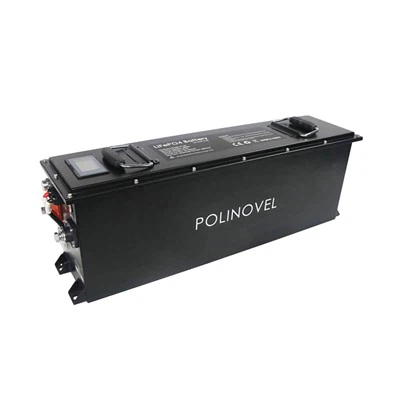
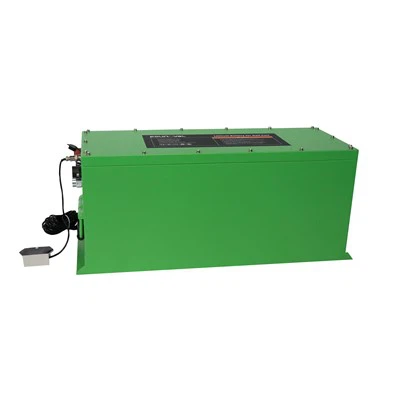
36V 105Ah Golf Cart Lithium Battery
Built for dependable performance, the Polinovel 36V 105Ah lithium battery delivers long-lasting power and operational efficiency to excel in golf cart applications. Lightweight and maintenance-free, it's designed to keep golf carts running longer with less downtime and lower operating costs.

Overview of 36V Golf Cart Lithium Battery
Revolutionize your golf cart experience with our advanced 36V 105Ah lithium battery. Designed for optimal performance, durability, and sustainability. Browse our full lineup of golf cart lithium batteries to compare models and find the right fit for your cart.
High Performance
Delivers stable power output, ensuring reliable performance for extended golf cart use-ideal for full-day operation without frequent recharging.
Long Lifespan
With over 4000 charge cycles, our lithium battery lasts 10+ years, significantly outperforming traditional lead-acid batteries which typically last 3-5 years. To understand what this means in practice, see how long golf cart batteries actually last under real-world operating conditions.
Eco-Friendly
Our lithium battery is highly recyclable and produces zero emissions during operation, making it an environmentally responsible choice for golf courses.
Specification
| Electrical Specifications | Mechanical Specifications | ||
| Nominal Voltage | 38.4V | Dimensions (LxWxH) | 436*334*243mm |
| Nominal Capacity | 105Ah | Weight | 40kg |
| Energy | 4032Wh | Case Material | SPCC |
| Self Discharge | <3% per month | IP Rating | IP54/IP65/IP67 |
| Cycle Life | >4000 cycles | Cell Type | LiFePO4 |
| Charge & Discharge Specifications | Temperature & Other Specifications | ||
| Charge Current | 100A | Charge Temperature | 0°C to 60°C / 32°F to 140°F |
| Charge Cut-off Voltage | 43.8V | Discharge Temperature | -20°C to 60°C / -4°F to 140°F |
| Charge Terminal/Connector | M8 | Storage Temperature | 10°C to 45°C / 50°F to 113°F |
| Discharge Current | 150A | Display | LED Display |
| Discharge Cut-off Voltage | 30V | Communication | RS485/CAN |
| Discharge Terminal/Connector | M8 | Shipping Classifiation | UN3480, Class9 |
What Are 36 Volt Lithium Golf Cart Batteries?
A 36 volt lithium golf cart battery is a LiFePO4 (lithium iron phosphate) rechargeable power system designed to replace traditional lead-acid battery packs in 36V electric golf carts. Unlike conventional setups that require six 6-volt or three 12-volt lead-acid batteries wired in series, a single 36V lithium battery delivers the same voltage in one compact, lightweight unit - typically weighing 60–80% less while providing up to twice the usable energy capacity.
These batteries offer significant performance gains over lead-acid alternatives. A quality 36V lithium golf cart battery lasts 4,000 to 6,000 charge cycles - roughly 8 to 12 years of regular use - compared to just 500–700 cycles for lead-acid. Charging time drops from 8–10 hours to as little as 1–2 hours with a compatible charger, and the battery maintains consistent voltage output throughout the entire discharge cycle. This means your cart performs at full power from the first hole to the last, with no gradual slowdown as the charge depletes. A built-in battery management system (BMS) protects against overcharging, deep discharge, overheating, and short circuits, making the battery virtually maintenance-free - no watering, no corrosion, and no acid spills to manage.
36 volt lithium golf cart batteries are engineered as drop-in replacements for popular cart models from EZGO, Club Car, Yamaha, and ICON. Most owners complete the conversion from lead-acid to lithium in under 30 minutes using existing wiring, with no modifications needed. The weight reduction - often 150 to 250 pounds less than a full lead-acid set - noticeably improves acceleration, hill-climbing ability, and overall handling, while also reducing wear on tires, suspension, and brakes over time. If you're planning a conversion, our 36V golf cart lithium battery upgrade guide covers charger selection, wiring compatibility, and everything else you need before you start.
Why Choose Our 36V Golf Cart Lithium Battery?
Lightweight design - 50% lighter than lead-acid batteries, enhancing driving range and handling
Fast charging - Fully charged in 1-2 hours with compatible chargers
Deep discharge capability - Safely discharges up to 95% of capacity without performance loss
Built-in BMS – Provides protection against overcharge, over-discharge, and short circuits
Maintenance-free - No need to add water or perform regular acid checks
Wide temperature range - Performs reliably from -20°C to 60°C


Performance Curve
Our 36V 105Ah lithium battery maintains a steady voltage throughout the discharge cycle, unlike lead-acid batteries which lose voltage quickly as they discharge.
Cycle Life Performance
Our lithium battery retains over 80% capacity after 4000–6000 cycles, vastly outperforming lead-acid batteries with only 300–500 cycles.

Advanced Lithium Battery Technology
Our 36V 105Ah golf cart lithium battery incorporates advanced LiFePO4 technology for superior performance and reliability.
Lithium Iron Phosphate (LiFePO4) Chemistry
Enhanced Safety
LiFePO4 is strong phosphate bonds make it chemically stable and non-combustible, greatly reducing the risk of fire or explosion-even under harsh charging or temperature conditions.
Structural Stability
Unlike other lithium chemistries, LiFePO₄ maintains crystal integrity over thousands of cycles, minimizing capacity fade and ensuring long-term reliability.
Environmentally Friendly
LiFePO4 batteries are free from cobalt and other toxic heavy metals, making them safer to produce, use, and recycle-ideal for golf courses focused on sustainable operations.
Thermal Resistance
The chemistry's high thermal stability helps maintain safe performance in prolonged outdoor use, even in vehicles exposed to direct sunlight or elevated ambient temperatures.

Battery Management System (BMS)
Our advanced BMS ensures safe and efficient operation of the battery pack by:
- -Monitoring individual cell voltages
- -Balancing cells during charging to ensure uniform capacity
- -Providing overcharge, over-discharge, and over-current protection
- -Monitoring temperature to prevent overheating
- -Providing short circuit protection
- -Communicating battery status and health
For a deeper look at how this technology works, read our complete guide on what a Battery Management System does and how it protects lithium battery packs.
Manufacturing Process
Our 36V 105Ah golf cart lithium batteries are produced using advanced manufacturing processes and strict quality control standards.
Cell Selection
Premium LiFePO4 cells are carefully selected and matched to ensure consistent capacity, performance, and safety.
Module Welding
Cells are laser welded into modules for strong electrical and mechanical connections.
Battery Pack Assembly
Modules are integrated with a BMS and enclosed in a durable housing designed for golf carts.
Quality Testing
Batteries undergo comprehensive tests to ensure safety, performance, and reliability with international standards.
Applications
Our 36V 105Ah lithium battery is perfect for a variety of applications beyond golf carts.

Electric Utility Vehicles
Ideal for electric utility vehicles used in campuses, resorts, and industrial settings where reliable power and long life are essential.
High energy density for extended use
Fast charging between shifts
Reduced maintenance costs

Low-Speed Electric Vehicles
Well-suited for low-speed vehicles used in residential communities, gated neighborhoods, parks, and delivery fleets.
Stable power for frequent stop-start use
Lightweight design improves driving range
Long cycle life reduces total cost of ownership

Sightseeing Shuttles
Perfect for electric shuttles used in tourist attractions, airports, and event venues that require quiet, clean, and dependable transport.
Quiet operation with zero emissions
Reliable performance for all-day use
Maintenance-free, ensuring uptime and lower service effort
Lithium vs. Lead-Acid Batteries
Discover why our 36V 105Ah lithium battery is the superior choice compared to traditional lead-acid batteries.
| Feature | 36V 105Ah Lithium Battery | Traditional Lead-Acid Battery |
|---|---|---|
|
Cycle Life |
4000-6000 cycles |
300-500 cycles |
|
Depth of Discharge (DoD) |
100% |
50% |
|
Energy Density |
160Wh/kg |
30-50Wh/kg |
|
Charging Efficiency |
95-98% |
70-80% |
|
Maintenance |
None |
Regular watering, cleaning, equalization |
|
Environmental Impact |
Recyclable, low toxicity |
Contains lead and sulfuric acid, higher environmental impact |
|
Initial Cost |
Higher upfront cost |
Lower upfront cost |
|
Total Cost of Ownership |
Lower over 5+ years |
Higher due to frequent replacements |
If the numbers above have you ready to make the switch, our practical guide on upgrading a golf cart from lead-acid to lithium batteries covers compatibility checks, charger requirements, and a full breakdown of total cost of ownership.
Why Lithium Batteries Are Worth the Investment
While the initial cost of a lithium battery is higher than a lead-acid battery, the long-term benefits make it a superior investment. Over the lifespan of the battery, it reduce expenses related to replacements, maintenance, and energy consumption.
Lower Total Cost
Fewer replacements and lower operating expenses result in a reduced total cost of ownership over the battery's lifetime.
Reduced Maintenance
Maintenance-free design eliminates the need for watering, acid cleaning, or equalization charging-reducing labor and service costs.

Increased Productivity
Fast charging and extended runtime minimize downtime, improving operational efficiency across vehicles and equipment.
Better Performance
Provides stable voltage, deep discharge support, and reliable cold-weather operation for consistent performance in all conditions.
Installation Guide
Installing our 36V 105Ah lithium battery is simple and safe when following the steps below:
Installation Steps
Safety First
Turn off the golf cart and remove the key. Wear protective gloves and safety eyewear to avoid potential injury.
Remove Old Batteries
Disconnect the negative (–) terminal first, then the positive (+) terminal. Carefully remove the old batteries from the compartment.
Prepare Battery Compartment
Clean the compartment to remove any debris, dirt, or corrosion. Ensure the area is dry and free of obstructions.
Install New Battery
Place the 36V 105Ah lithium battery into the compartment. Make sure it is securely positioned and immobilized to prevent movement during operation.
Connect Battery Cables
Connect the positive (+) cable first, followed by the negative (–) cable. Ensure all connections are tight and secure.
Inspect and Verify
Double-check all terminals and wiring for secure connections. Inspect for any signs of wear, damage, or loose components.
Initial Charging
Use a compatible lithium battery charger to fully charge the battery before first use. Follow the charger manufacturer's instructions.
System Test
Turn on the golf cart and verify all systems are functioning properly. Check for any warning lights or abnormal behavior during operation.
Installation Tips
Use a torque wrench to ensure proper tightening of terminals (typically 8-10 ft-lbs).
Ensure battery wiring follows your golf cart manufacturer's grounding or isolation requirements.
If your golf cart has a battery meter designed for lead-acid batteries, it may need to be recalibrated or replaced.
For optimal performance, use a charger specifically designed for lithium batteries.
Do not mix lithium batteries with lead-acid batteries in the same system.
Ensure adequate ventilation to help dissipate heat, even though LiFePO4 batteries do not release harmful gases under normal operation.
Refer to your golf cart's user manual for any specific installation instructions or considerations.
Charger Compatibility
Our 36V 105Ah lithium battery requires a compatible charger with the following specifications:
Output voltage: 43.8V
Maximum charging current: 100A
Lithium battery charging profile (no equalization charge)
Built-in safety features (overcharge, short circuit protection)
Using an incompatible charger may damage the battery and void the warranty.
Maintenance & Care
One of the key advantages of our 36V 105Ah lithium battery is its low maintenance requirements.
Charging Best Practices
Charge after each use for optimal battery life
Avoid storing the battery at full charge for extended periods
Use a compatible lithium battery charger
Do not charge in temperatures below 0°C or above 45°C
Regular Inspections
Check battery terminals monthly for tightness and corrosion
Inspect the battery casing for cracks, swelling, or deformation
Ensure the BMS (Battery Management System) is operating properly
Use a multimeter to periodically verify battery voltage
Storage Guidelines
Store at 40-60% charge if not in use for extended periods
Keep in a cool, dry environment (ideal temperature: ~20°C)
Charge the battery every 3 months during storage
Avoid exposure to direct sunlight or extreme temperatures
Maintenance Comparison: Lithium vs. Lead-Acid
Lithium Battery Maintenance
No watering or electrolyte checks required
No equalization charging needed
Minimal self-discharge (3% per month)
Terminals designed for corrosion resistance
Built-in BMS protects against overcharge and over-discharge
Lead-Acid Battery Maintenance
Regular watering required (typically every 1-3 weeks)
Equalization charging recommended periodically (e.g., every 20-30 cycles)
High self-discharge (typically 12-20% per month)
Frequent terminal cleaning due to corrosion
No built-in protection against overcharge/over-discharge
Troubleshooting Guide
If you experience any issues with your 36V 105Ah lithium battery, refer to this troubleshooting guide.
| Issue | Possible Cause | Solution |
|---|---|---|
|
Battery not charging |
|
|
|
Battery drains quickly |
|
|
|
BMS error light is on |
|
|
|
Voltage drops during use |
|
|
Frequently Asked Questions

How long does the 36V 105Ah lithium battery last?
The battery is rated for 4000–6000 cycles at 80% depth of discharge, which translates to 8–10 years of typical use, depending on operating conditions and maintenance.
What happens if the 36V 105Ah battery is over-discharged?
The built-in BMS will automatically disconnect the output to protect the battery. In most cases, the battery can be recovered by connecting a compatible lithium charger and allowing it to begin charging slowly.
How should I store the 36V 105Ah battery when not in use for long periods?
Store at 40–60% state of charge in a cool, dry place (around 20°C). Recharge every 3 months during storage to maintain battery health.
Is the 36V 105Ah lithium battery compatible with my existing golf cart system?
Yes. Our battery is designed as a drop-in replacement for most 36V lead-acid systems. It features standard terminals and mounting feet for easy installation.
Can I use the 36V 105Ah lithium battery in cold weather?
Yes, the battery can operate reliably in cold environments. It supports discharge temperatures as low as –20°C. However, charging should only be done when the ambient temperature is above 0°C. For use in consistently cold climates, we recommend a battery with a built-in heating function to protect performance and longevity.
Can l use my existing golf cart charger with this battery?
It depends on your charger. Most traditional lead-acid chargers are not compatible with lithium batteries due to different charging profiles. We recommend using a charger specifically designed for lithium batteries with an output voltage of 43.8V and a recommended current of 20-50A. Using an incompatible charger may damage the battery and void the warranty.
Hot Tags: 36v 105ah golf cart lithium battery, China 36v 105ah golf cart lithium battery manufacturers, suppliers, factory