What Is Overcharge?
I've seen a lot of lithium batteries come back to our shop with swollen cells. Nine times out of ten, the owner hooked it up to an old lead-acid charger and walked away. Overcharge is probably the fastest way to kill a perfectly good LiFePO4 battery.
Overcharge happens when current keeps flowing into a cell after it's already full. Lithium iron phosphate cells top out around 3.65V per cell. A 12V battery pack with four cells in series should stop charging at 14.6V. Go past that and you're asking for trouble.
What Goes Wrong Inside
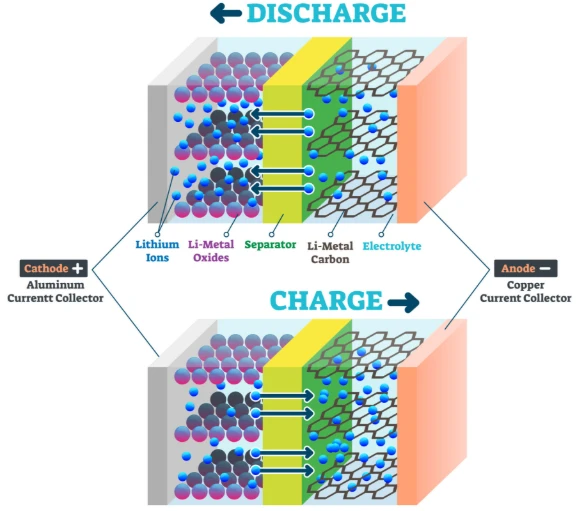
When you push a LiFePO4 cell past 3.65V, lithium ions have nowhere to go. The cathode is saturated. Extra lithium starts plating out as metallic lithium on the anode surface. This is bad news. Metallic lithium is reactive and the plating is irreversible. Your capacity drops and it's not coming back.
I talked to a guy last year who ran his house battery bank at 14.8V for six months because his charge controller was set wrong. He lost maybe 30% of his capacity. The cells weren't dangerous but he basically threw away a third of what he paid for.
Chargers and Charge Controllers
Most problems I see come from mismatched equipment. Lead-acid chargers don't work for lithium. A typical AGM charger floats at 13.6-13.8V and bulk charges up to 14.4-14.7V. Those numbers look close to lithium specs but the charging algorithm is completely different.
Lead-acid batteries want a long absorption phase at high voltage. Lithium batteries want the opposite. You hit the voltage target and you stop. A proper lithium charger or a good MPPT controller with a lithium profile will cut off cleanly. An AGM charger will sit there pushing current for hours.
Victron, Renogy, EPever-most of the decent charge controllers have lithium presets now. Use them.

The BMS Doesn't Fix Everything
Every lithium battery has a battery management system. A lot of people think the BMS makes the battery foolproof. It doesn't.
The BMS is a safety backstop. When voltage gets too high, it disconnects the pack. This protects against thermal runaway and fire. But repeated BMS trips still stress the cells. Each time you hit that ceiling, some damage happens before the cutoff kicks in. The BMS keeps your RV from burning down. It doesn't keep your battery healthy.
I've seen cheap imported batteries with BMS cutoffs set at 15.2V or higher. That's way too late. By the time the BMS acts, the cells have already been sitting in an overcharged state.

Temperature Makes It Worse
Overcharge damage accelerates with heat. Charging a hot battery past its voltage limit is worse than doing the same thing at room temperature. Summer installations in engine compartments or unventilated spaces have a harder time. If your battery bay hits 100°F regularly, your margin for error shrinks.
Some BMS units have temperature compensation. Most of the cheap ones don't.
Staying Out of Trouble
Set your charge voltage correctly from day one. For most LiFePO4 batteries, 14.2-14.4V is a good target for bulk charging and 13.6V or so for float. Check your manufacturer's specs because some brands run slightly different. Battle Born recommends 14.4V. Renogy says 14.2V. Both work fine.
Don't trust the charger out of the box. I've seen brand new units with factory settings that were just wrong. Spend five minutes with a multimeter and verify what's actually happening at the terminals.
If you're running solar, watch your absorb time setting. Most lithium batteries don't need more than 20-30 minutes of absorption. Some setups work fine with zero absorption time-just hit the voltage and switch to float.
Overcharge isn't complicated. Keep the voltage where it belongs and the battery will last. Ignore it and you'll be buying a new pack in two years instead of ten.